
Casa Program Curriculum
“The most important period of life is not the age of university studies, but the first one, the period from birth to the age of six. For that is the time when man’s intelligence itself, his greatest implement, is being formed. But not only his intelligence; the full totality of his psychic powers.”
Enrollment Requirements
To enroll in the Casa Program your child must be at least 2.5 years of age by the beginning of the school year and independently toileting. Early admission to the Casa Program is available to children in the Bambini Program once they have reached the age of two and a half years, as long as they show readiness and are using the toilet completely and independently.
The Casa room offers morning (8:30 AM - 11:30 AM) and full-day (8:30 AM - 3:15 PM) programs from Monday through Friday. Additionally, there is extra before school and after school care available.

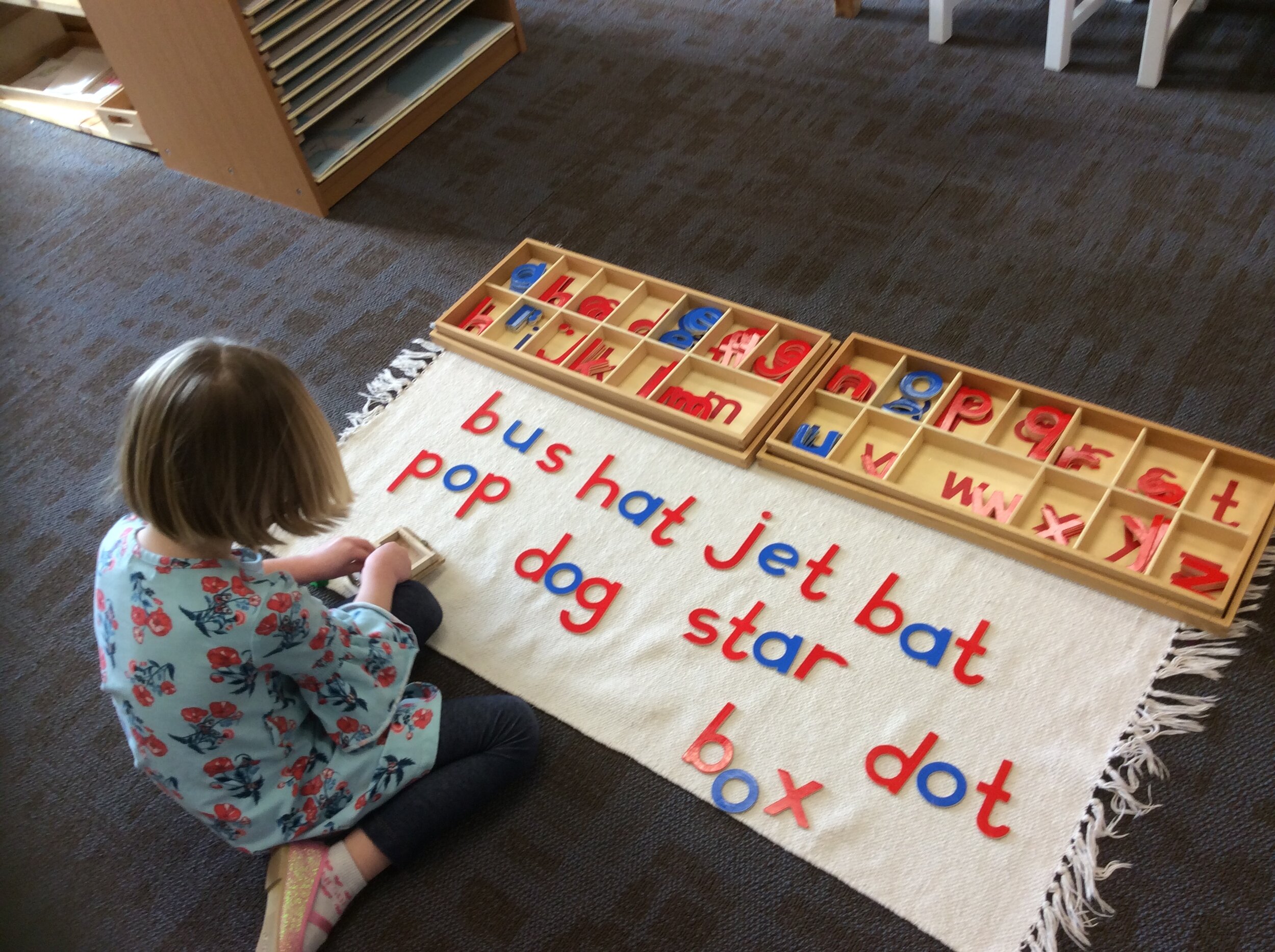
Jacqueline, 4 years old - Journal Writing
Each child progresses at his own pace, allowing him to be challenged based on individual need. Just as children learned to sit, crawl, walk, and run they naturally learn to do the rest, when presented with the right environment.
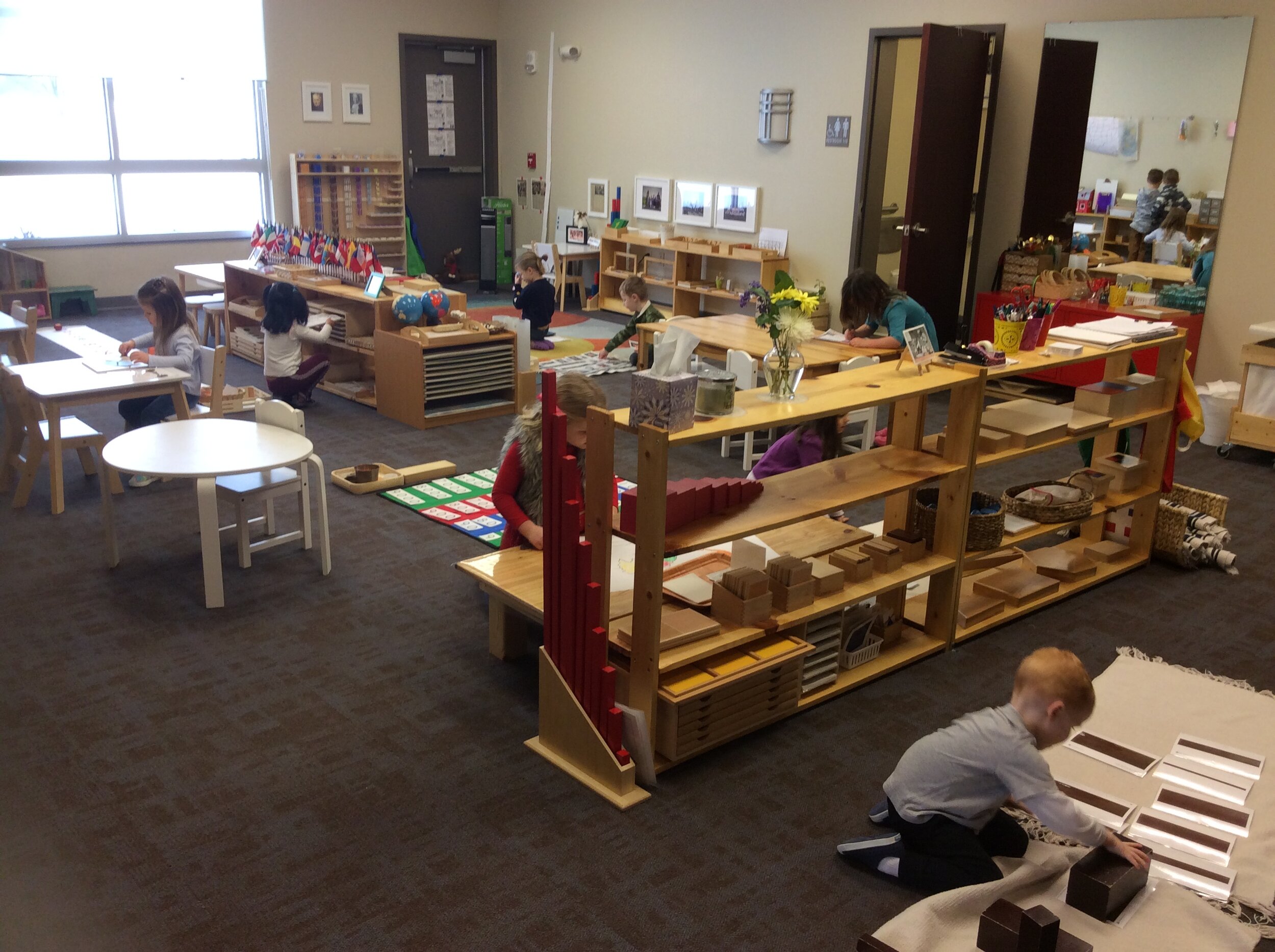
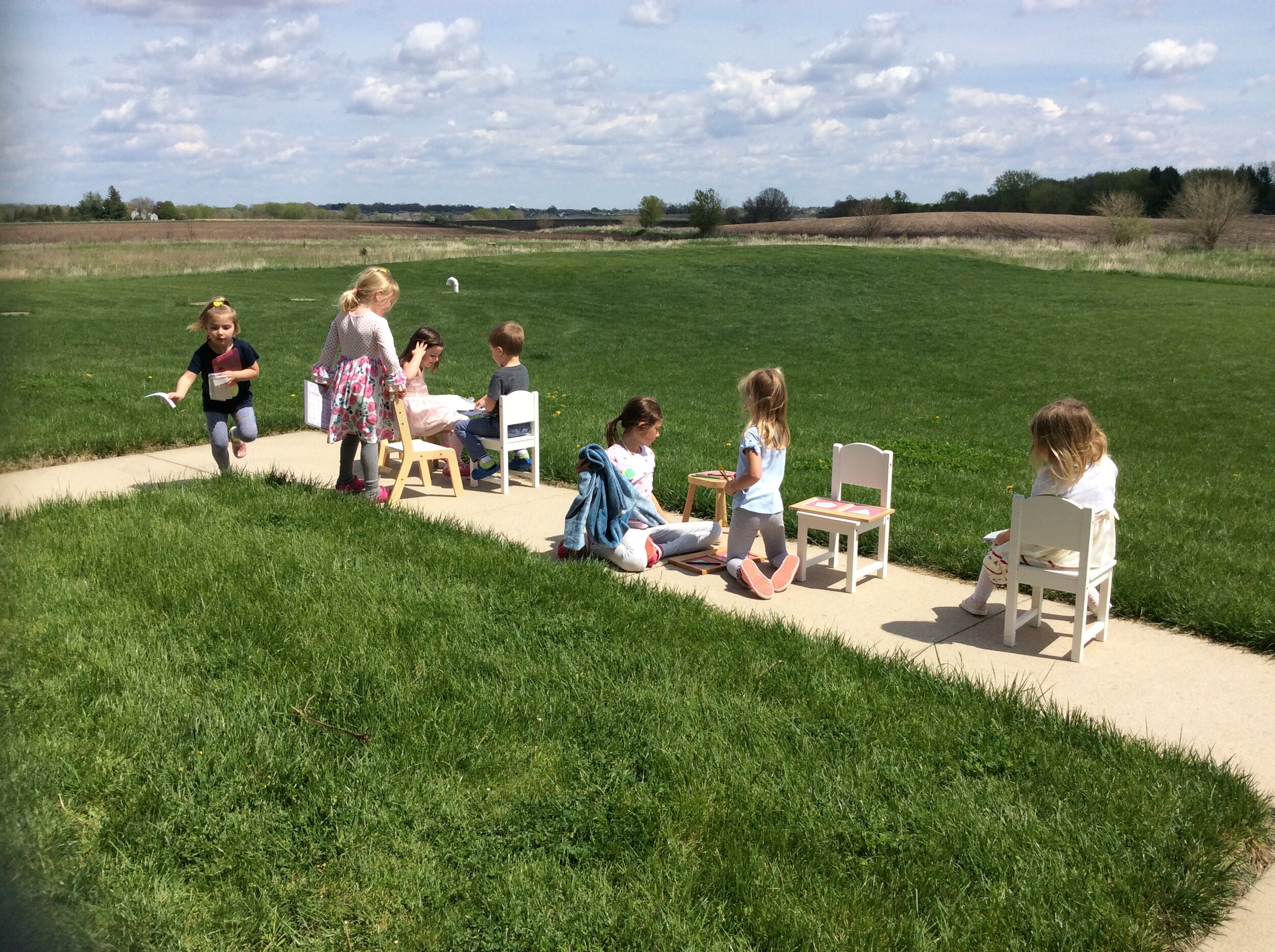
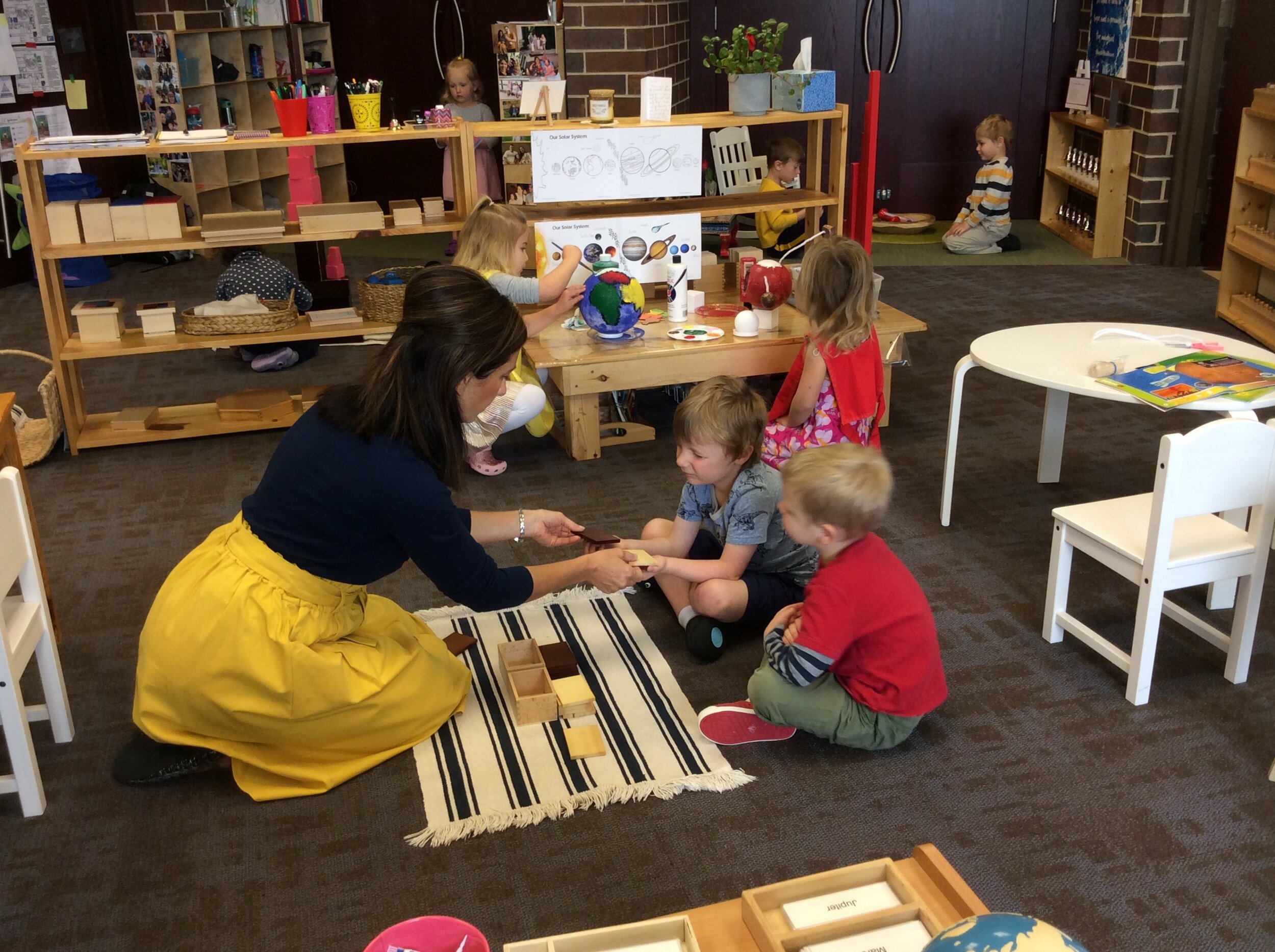
Our classroom is fully equipped and expertly organized with the full suite of Montessori materials which are scientifically designed to be hands-on, self-correcting, and multi-sensorial. There is a natural connection between all areas of study in the classroom which aids the child's development and enhances his natural enthusiasm for learning by demonstrating how all of life is interconnected.
Montessori materials and lessons are structured to support the child’s need for movement as he is constantly moving objects with his hands and actively exercising his senses. Materials and lessons gradually progress from concrete concepts to abstract mental operations and calculations. This level is usually achieved in traditional elementary classes but is found in Montessori Casa classrooms. Each step of the curriculum, introduces a new degree of challenge while building upon previously mastered concepts. The child is always prepared before being introduced to a new material and concept so that he may find success and engage in discovery. The environment and rhythms are designed to support a child’s growth, not make him feel like a failure.
Areas of Education
1. Peace Education:
This area teaches an important part of the Montessori curriculum, which is how to get along. The Peace corner is full of lovely, interesting and calming objects from around the world and connected with our unit of study, for children to touch and hold. We also have a delicate Peace Rose - with the help of the teachers - that teaches children how to resolve their own conflicts and communicate their feelings and learn to listen and be respectful of each other's feelings. Or a child can simply go and enjoy a few peaceful moments alone.
2. Grace and Courtesy:
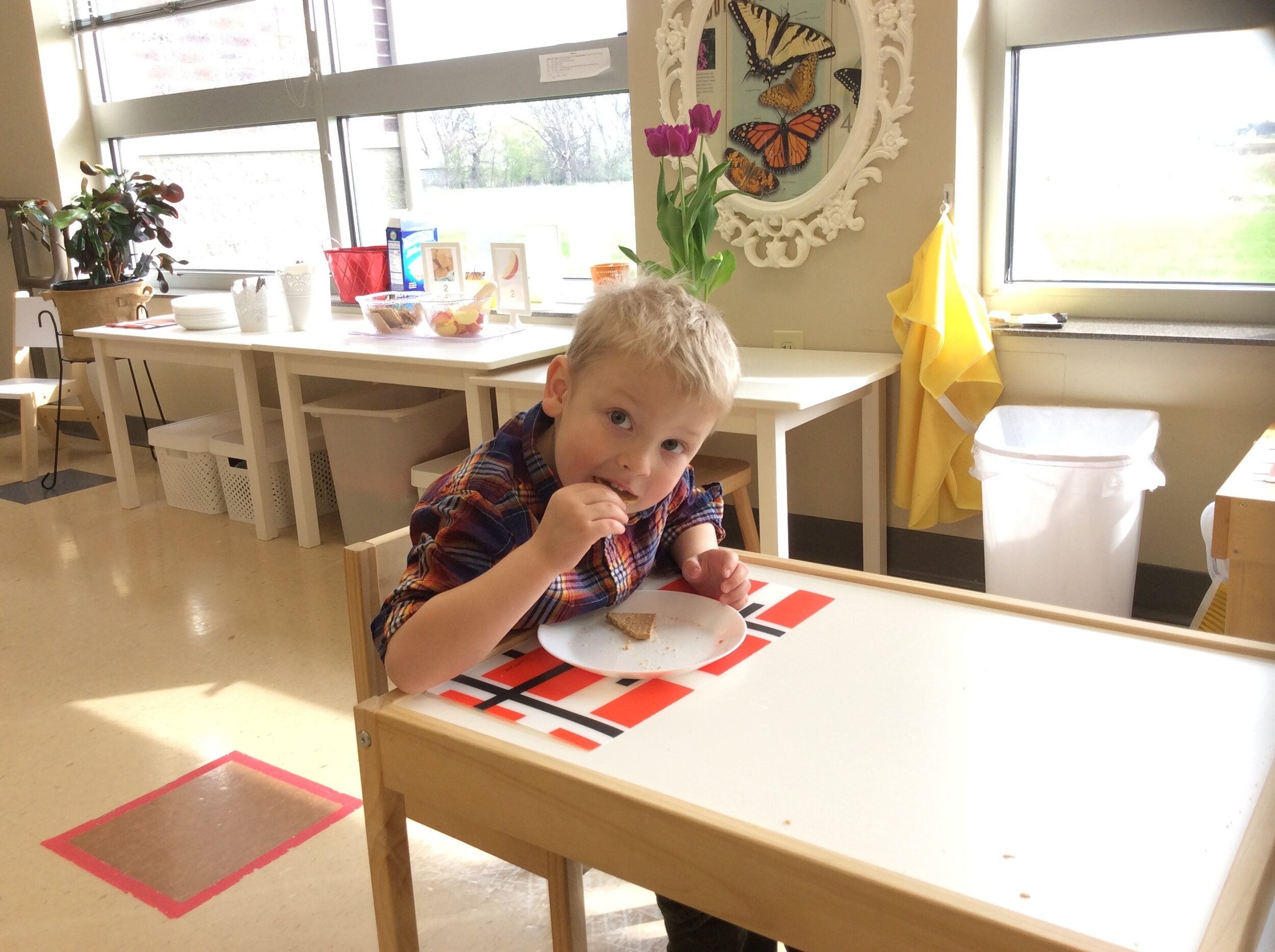
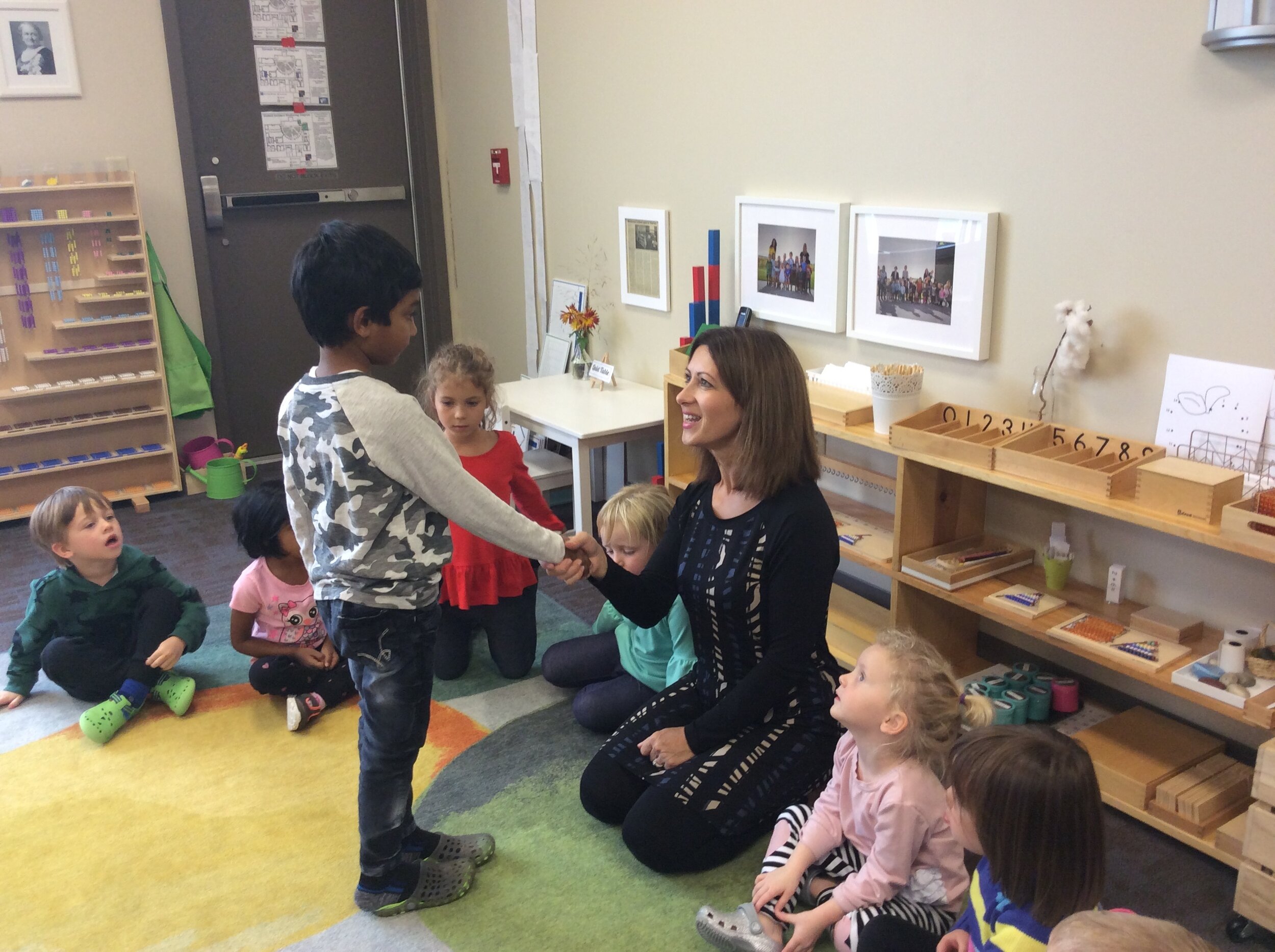
This area of the curriculum teaches respect for self and others. Children learn to be gracious with one another, they understand the importance of moving carefully, carrying things properly and returning them to the right spot. Children learn to use polite and respectful language, be considerate of others, display good table manners, properly introduce themselves, answering the phone, politely dismissing themselves, and interrupting politely.
3. Practical Life:
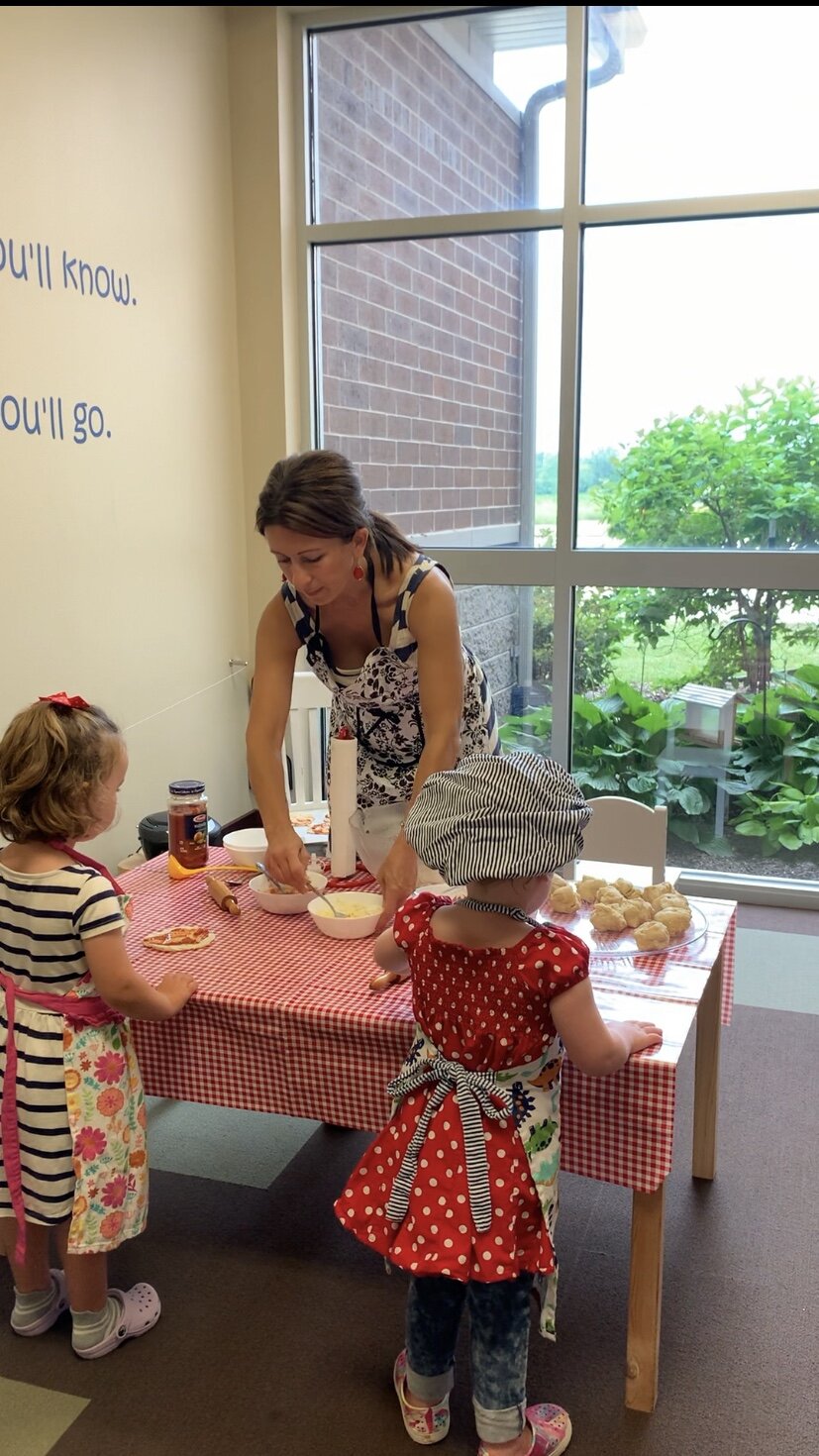
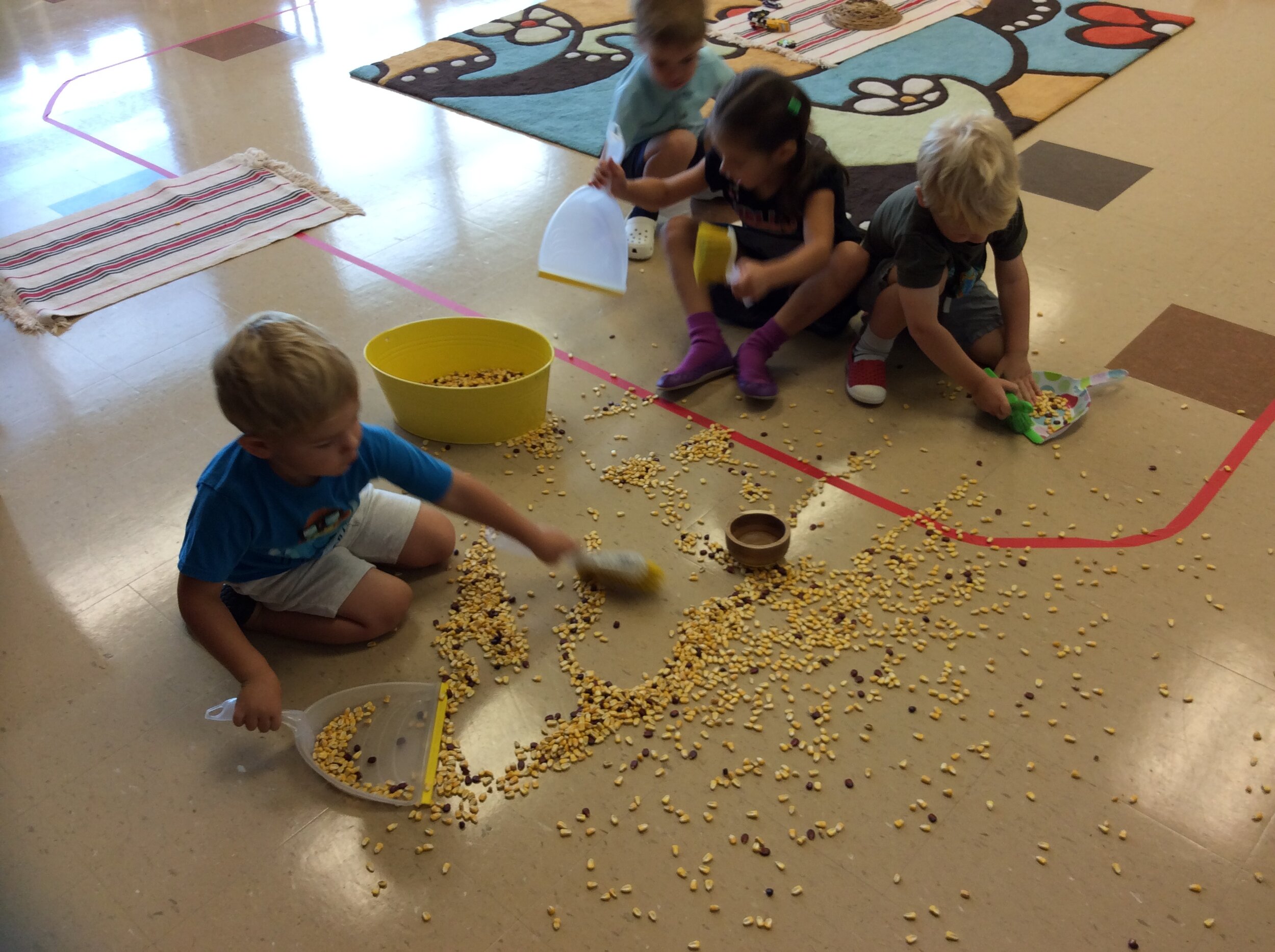
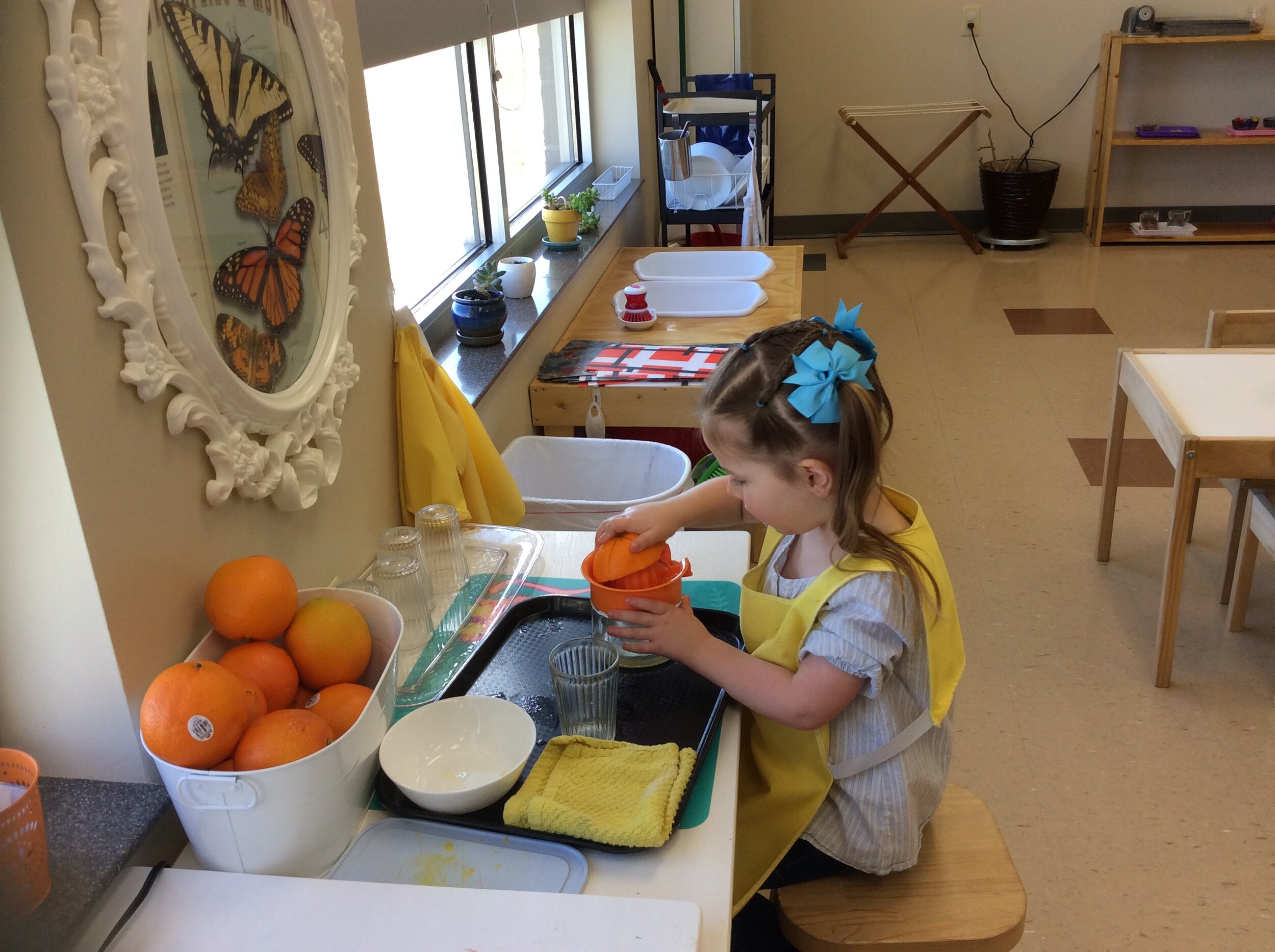
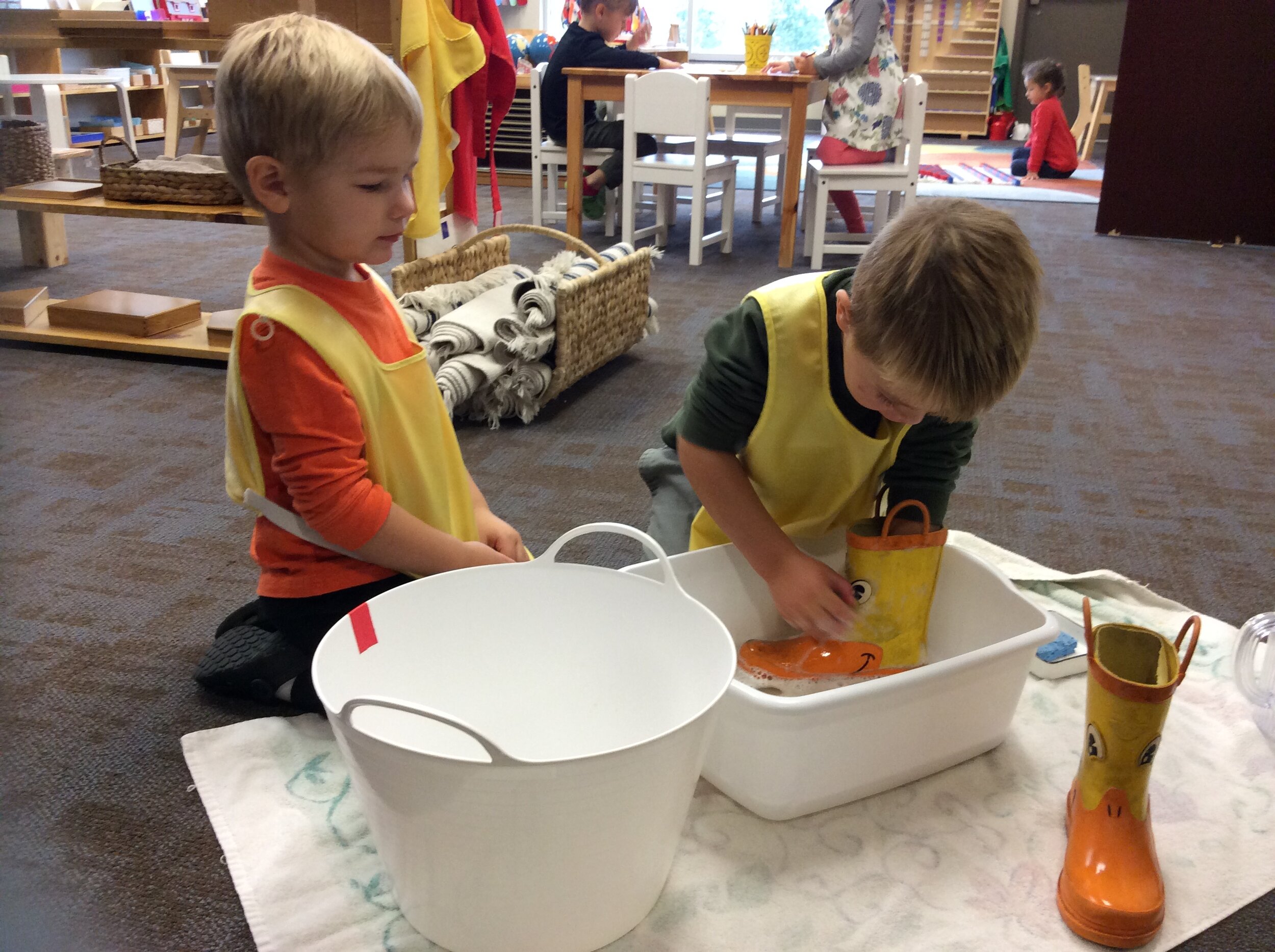
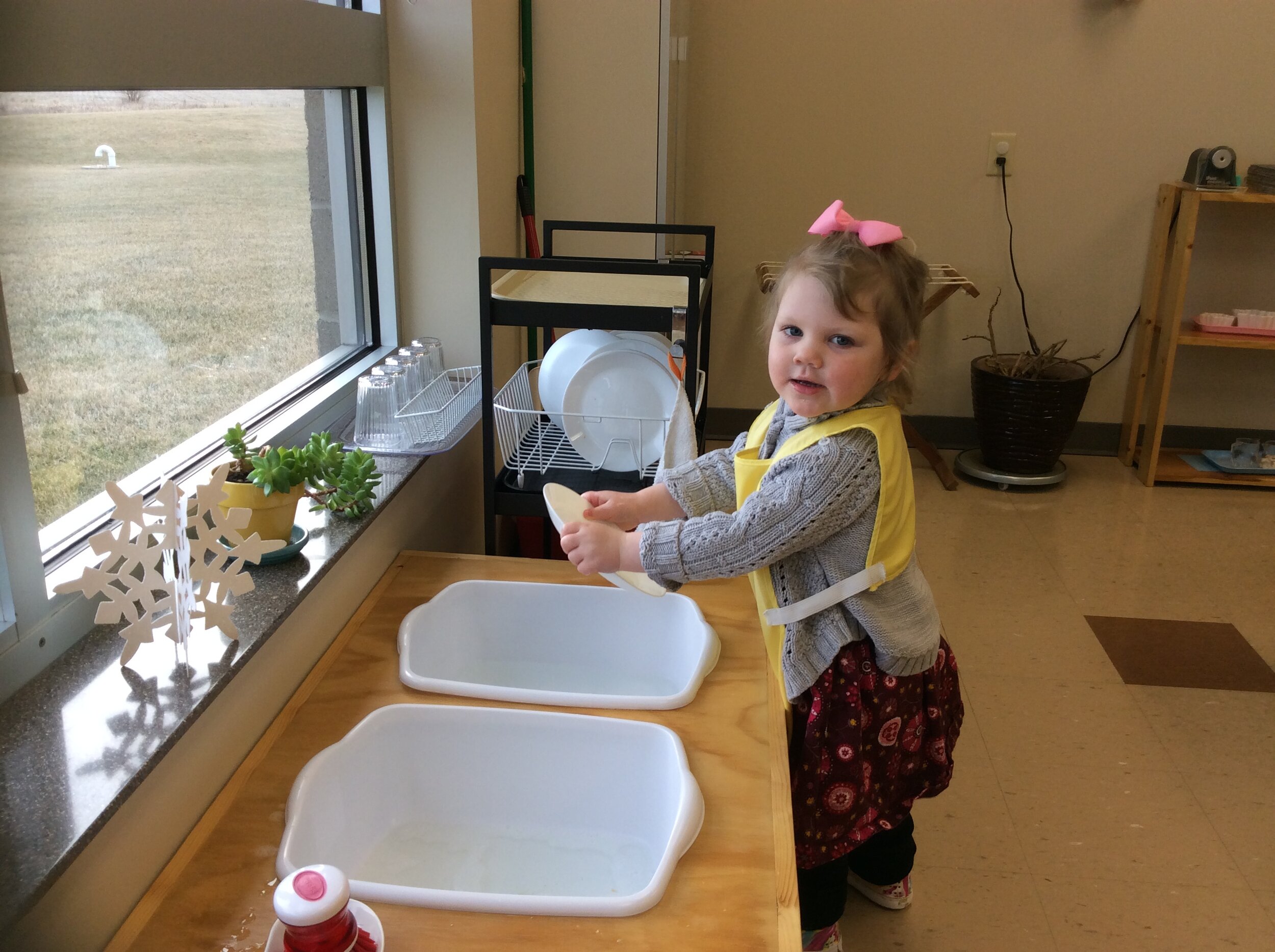
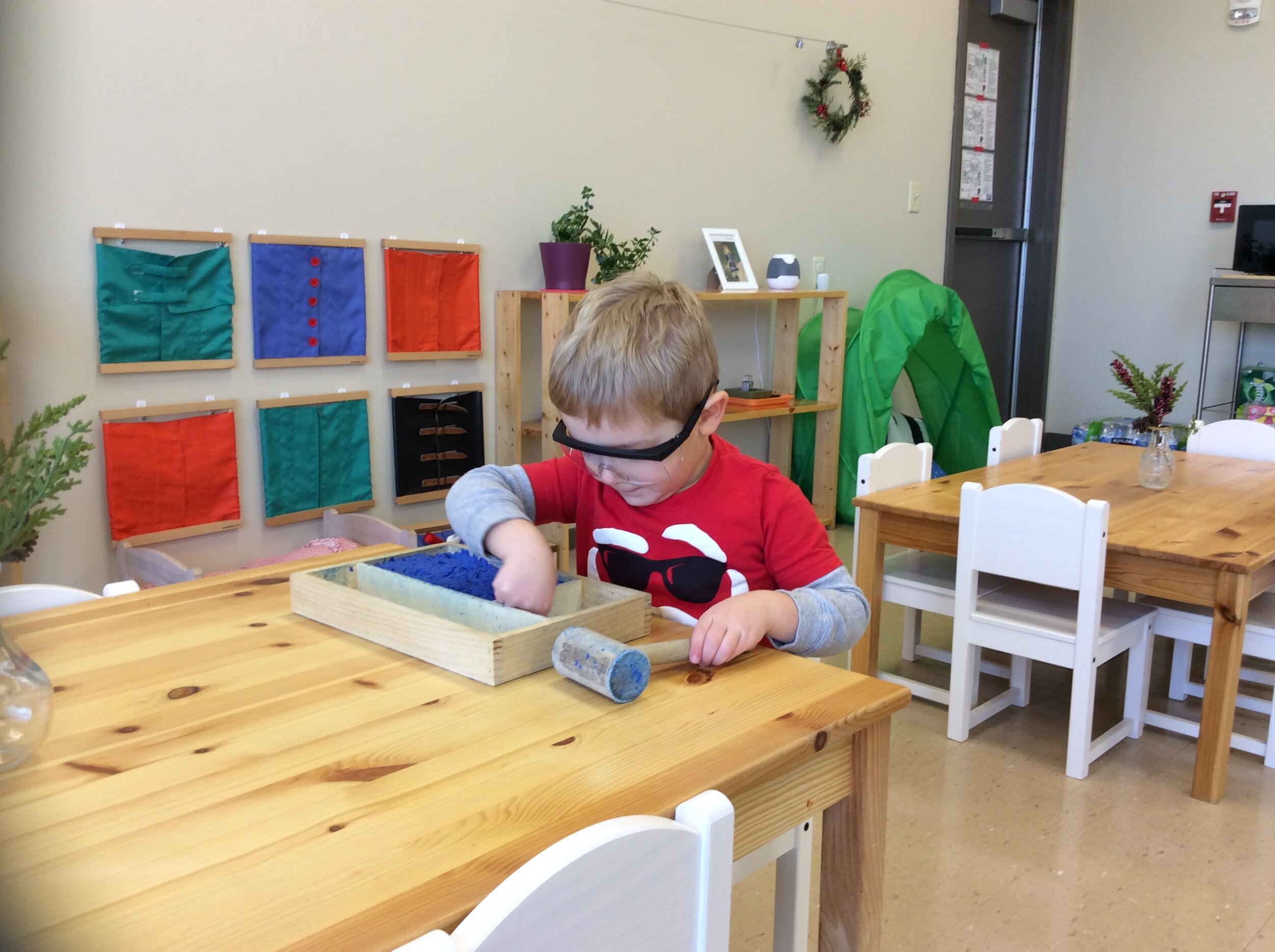
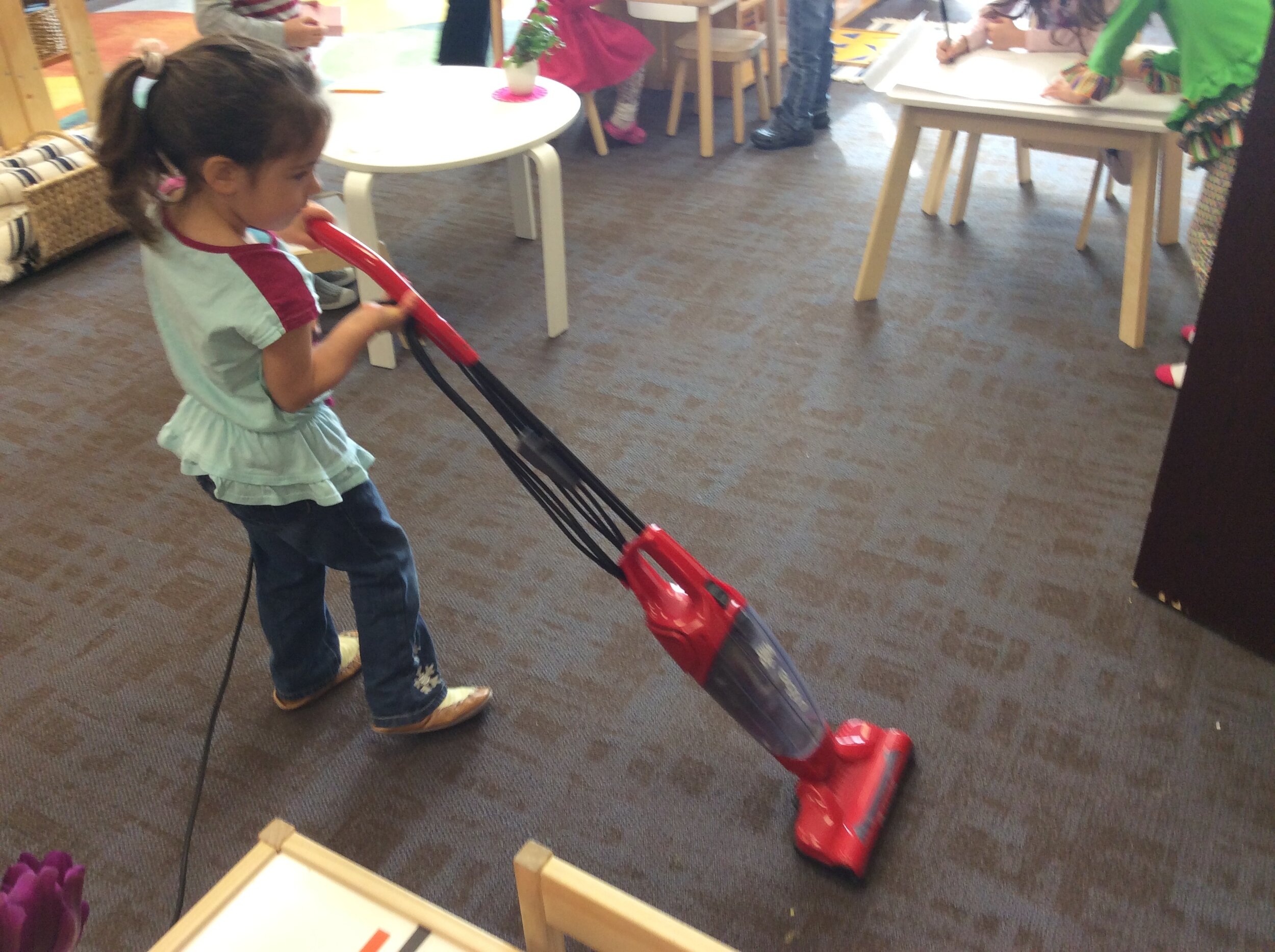
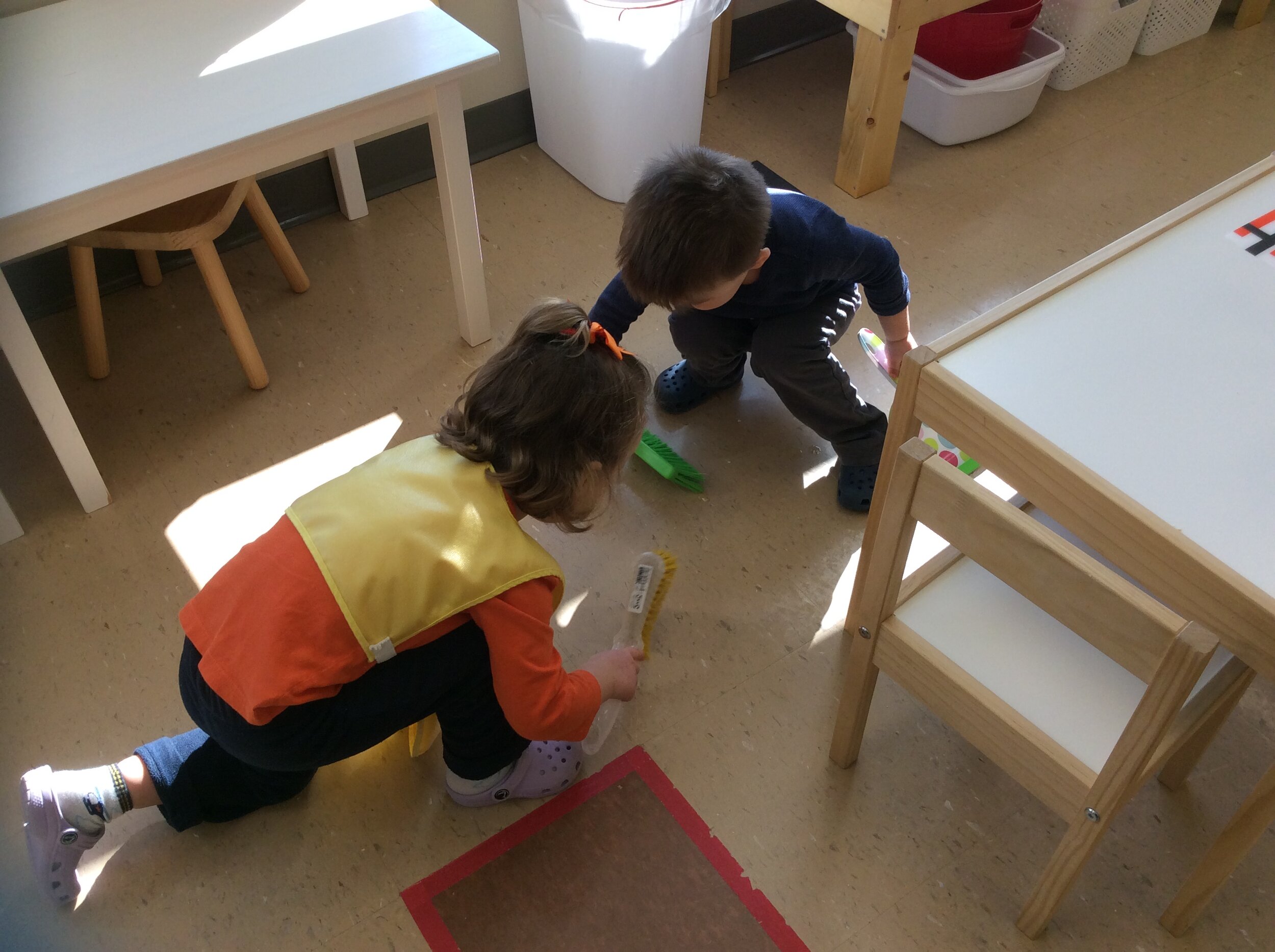
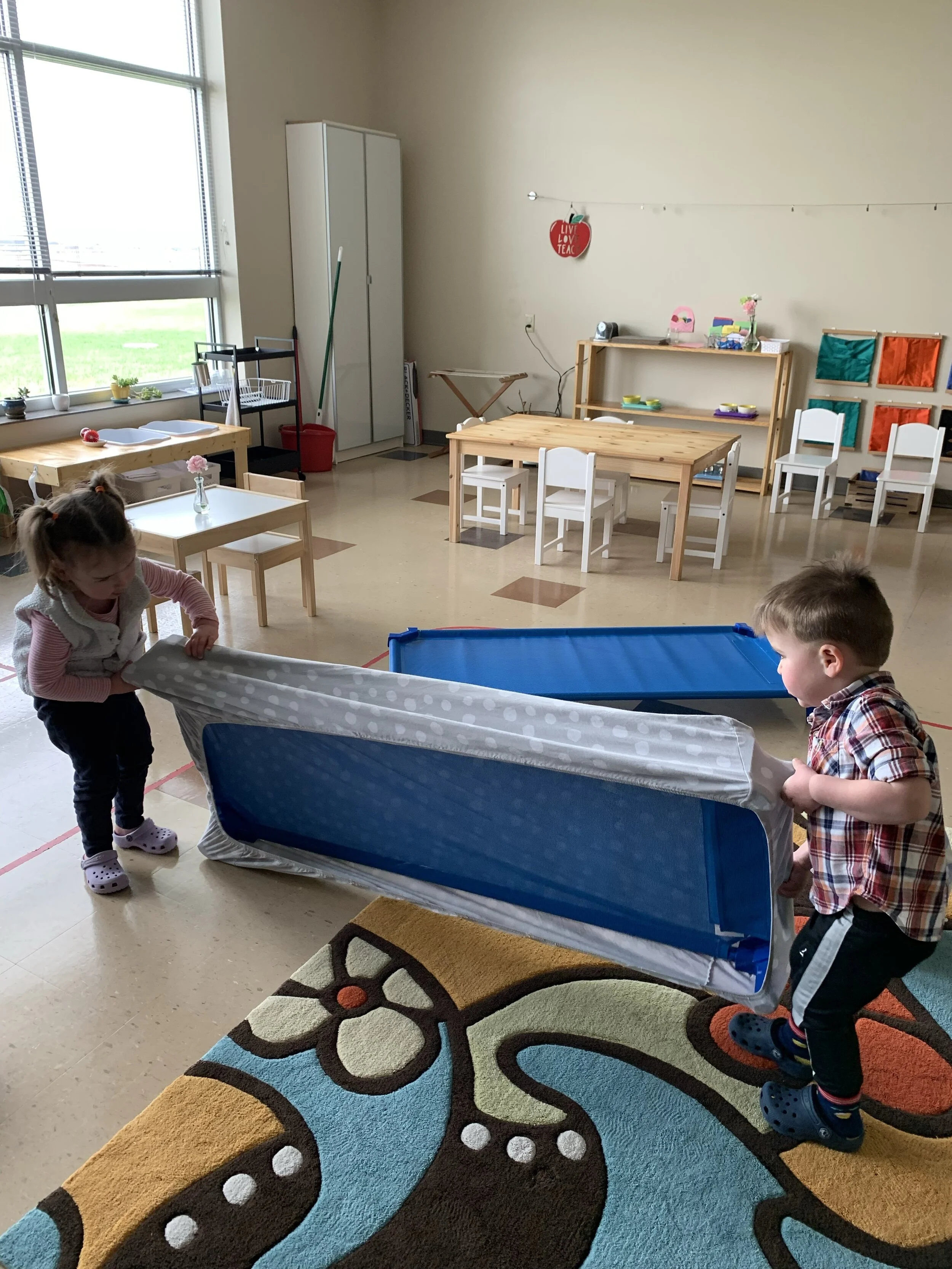
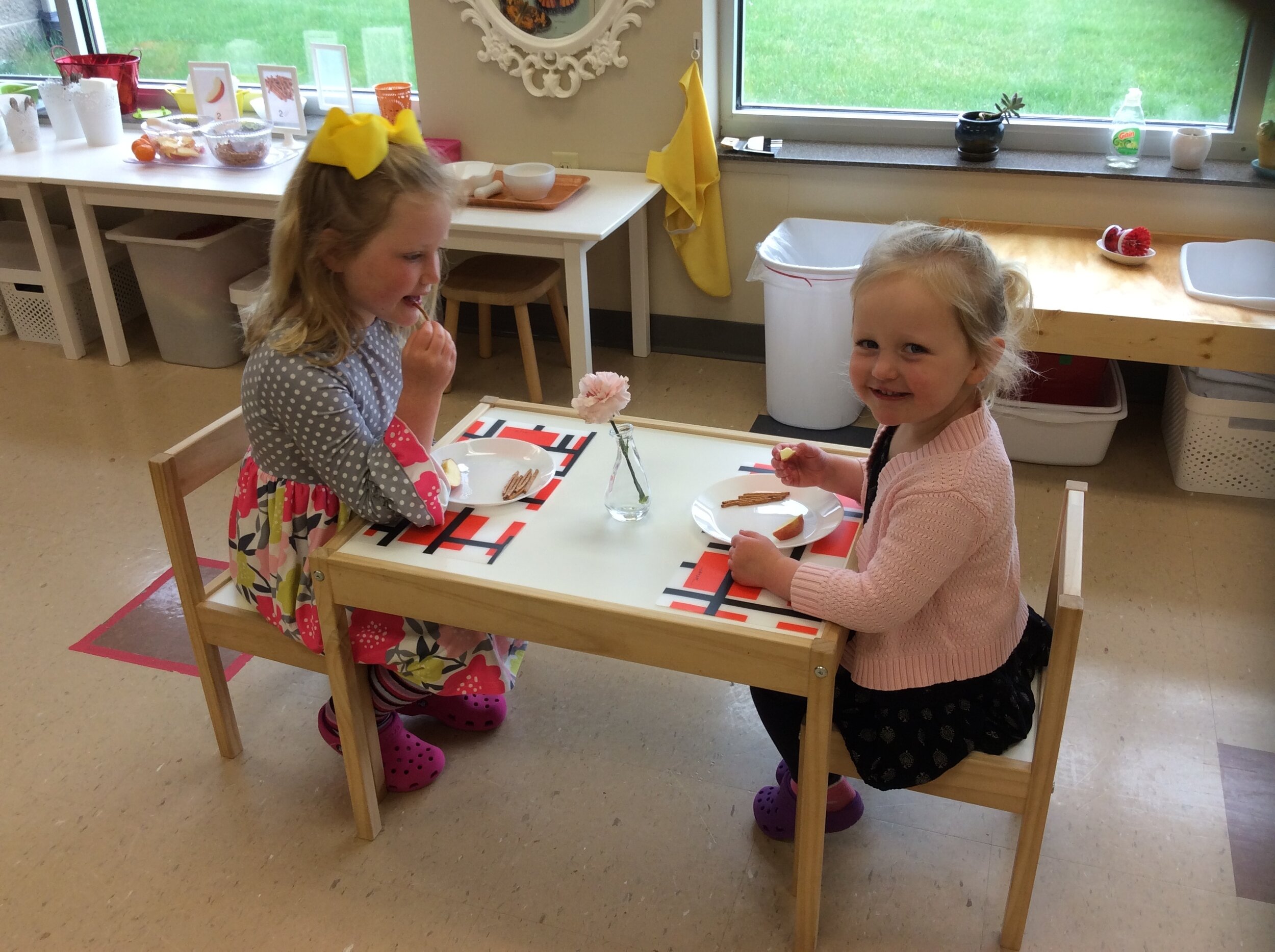
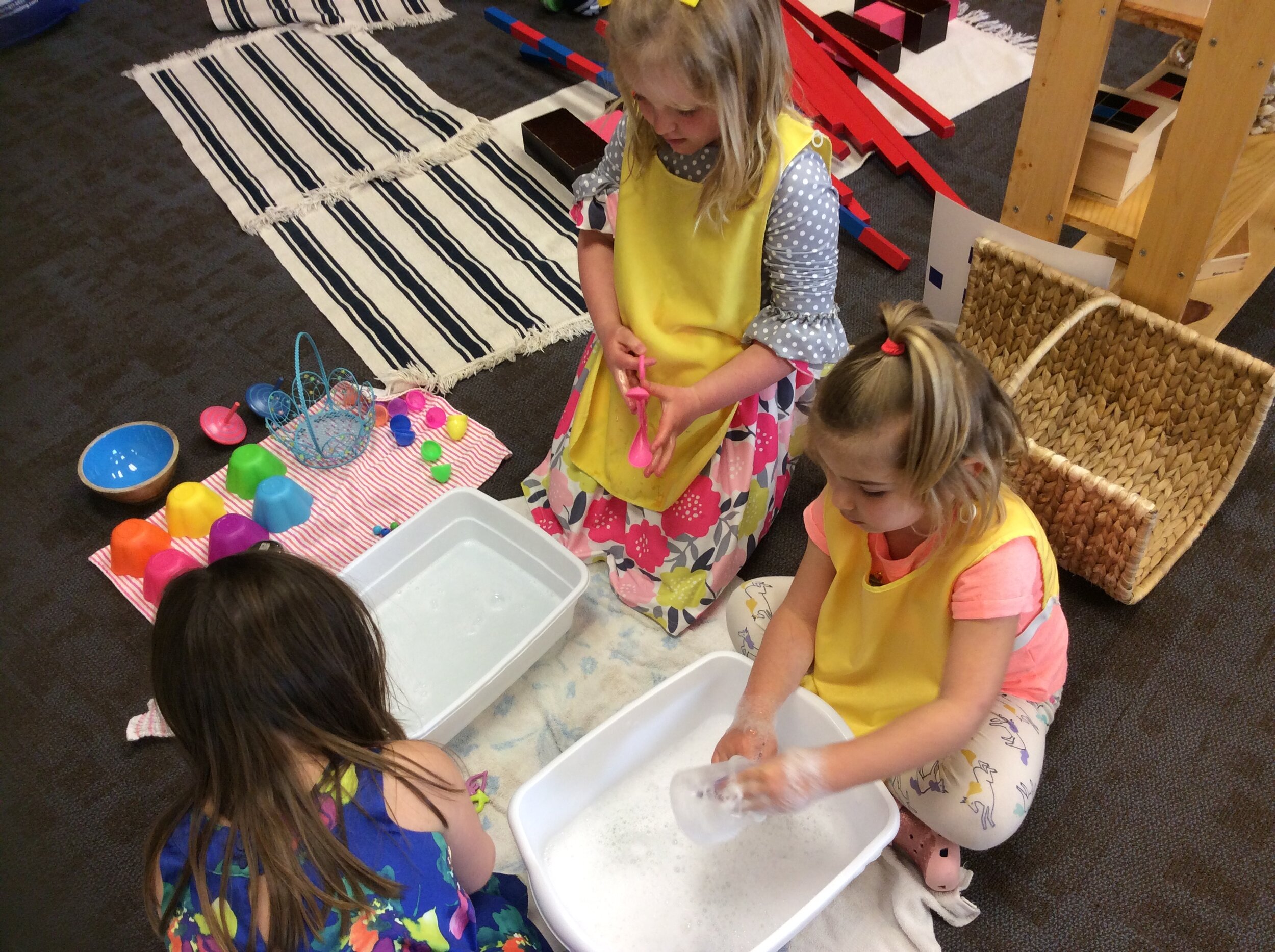
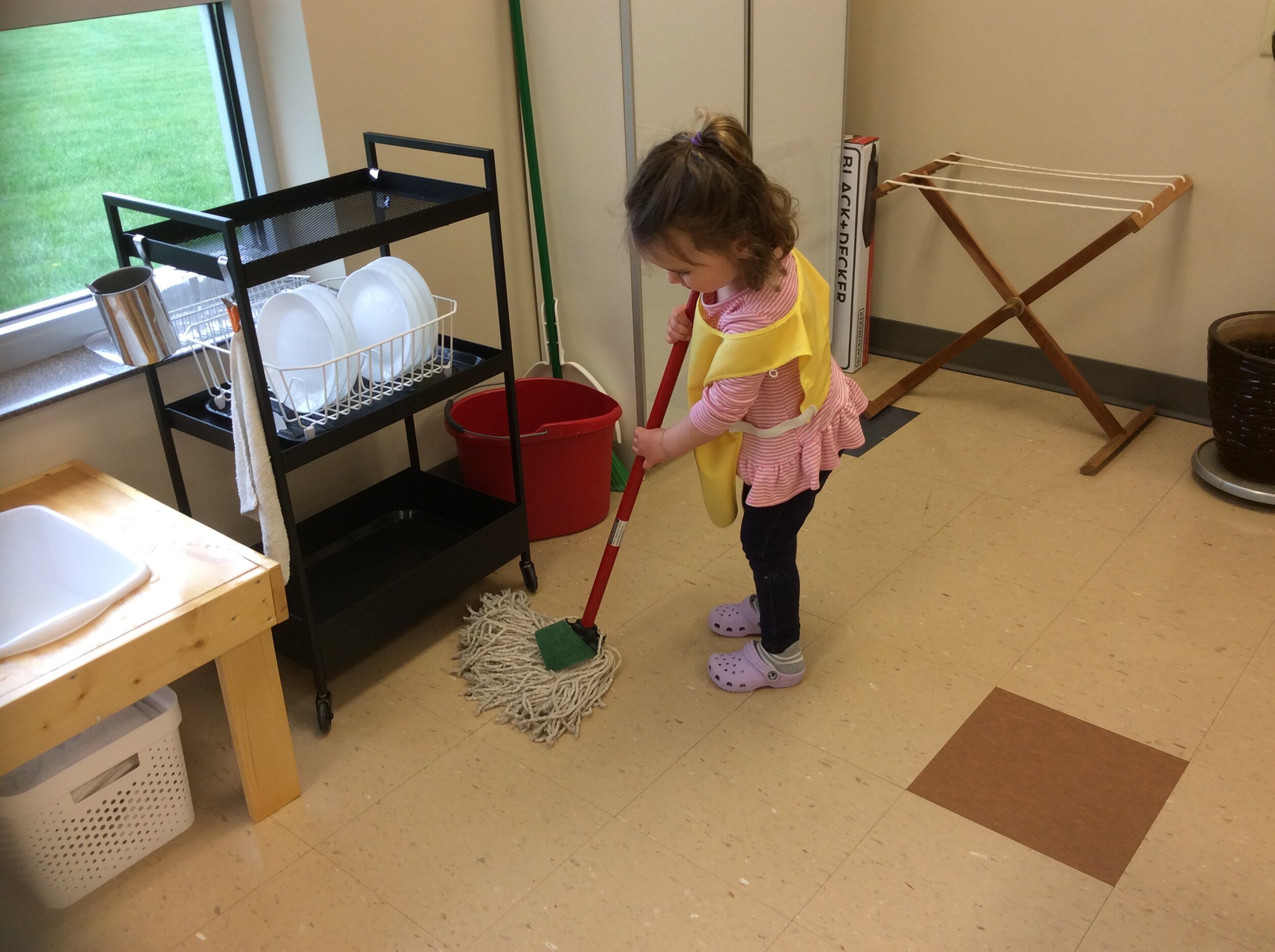
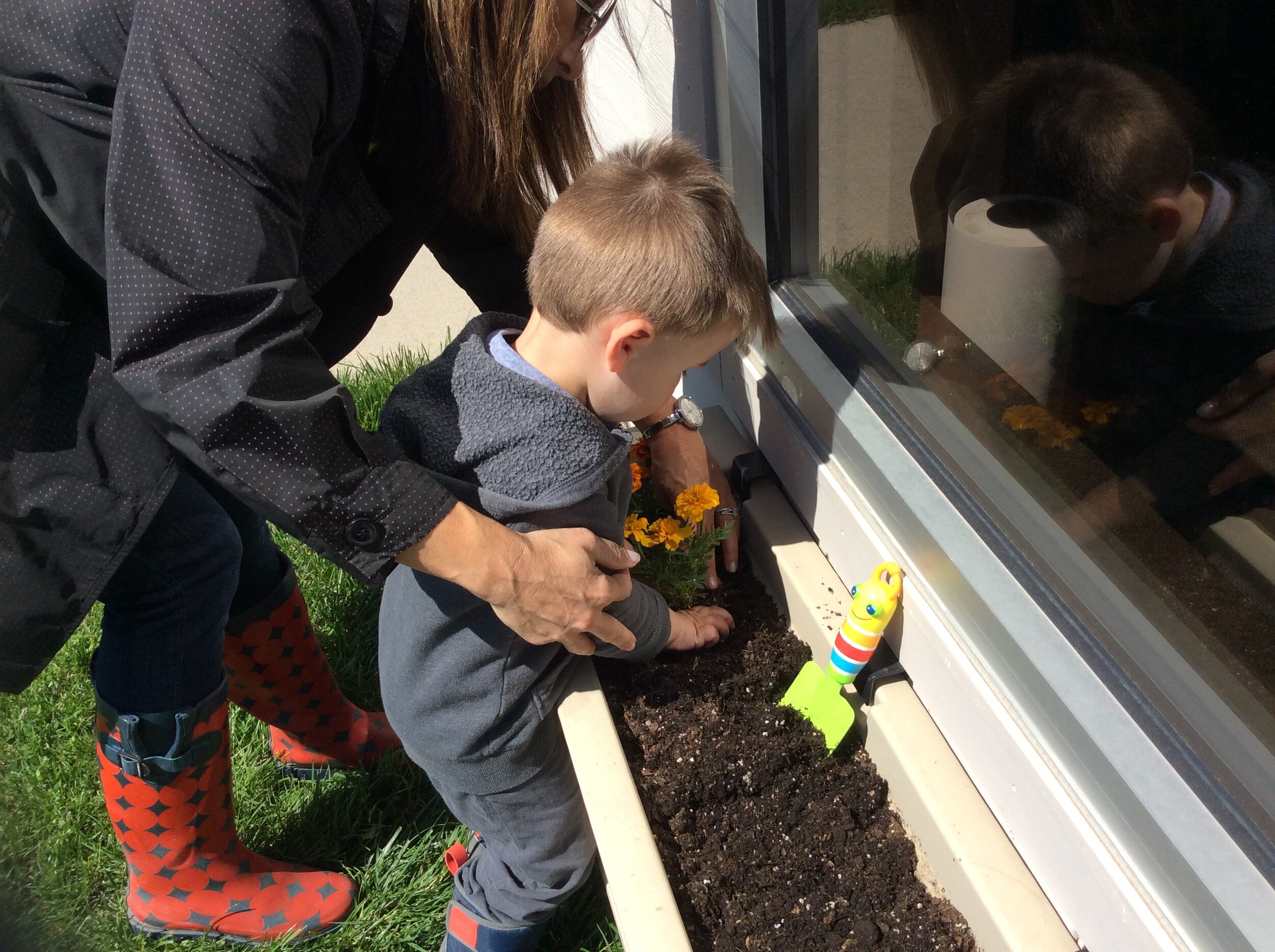
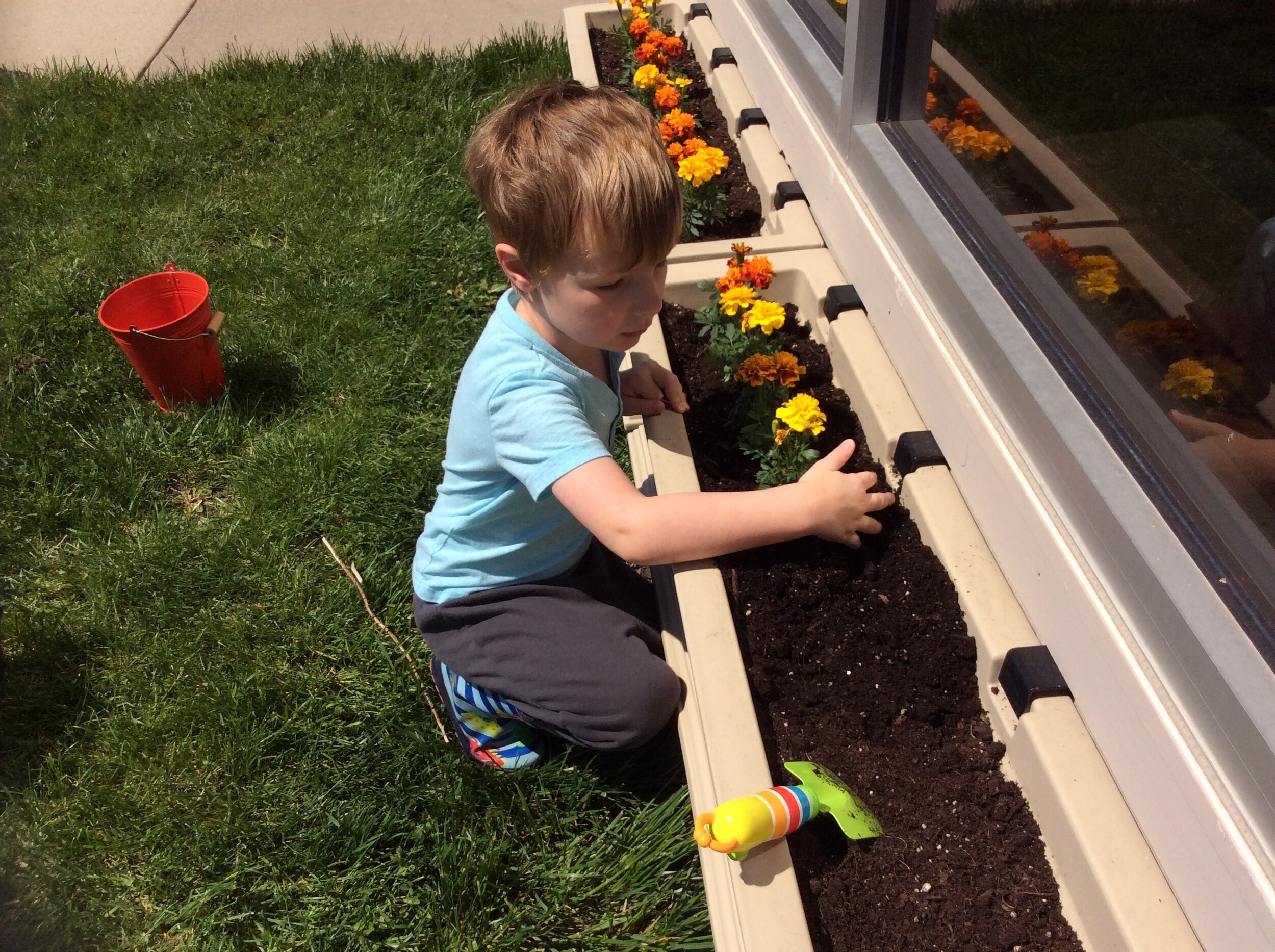
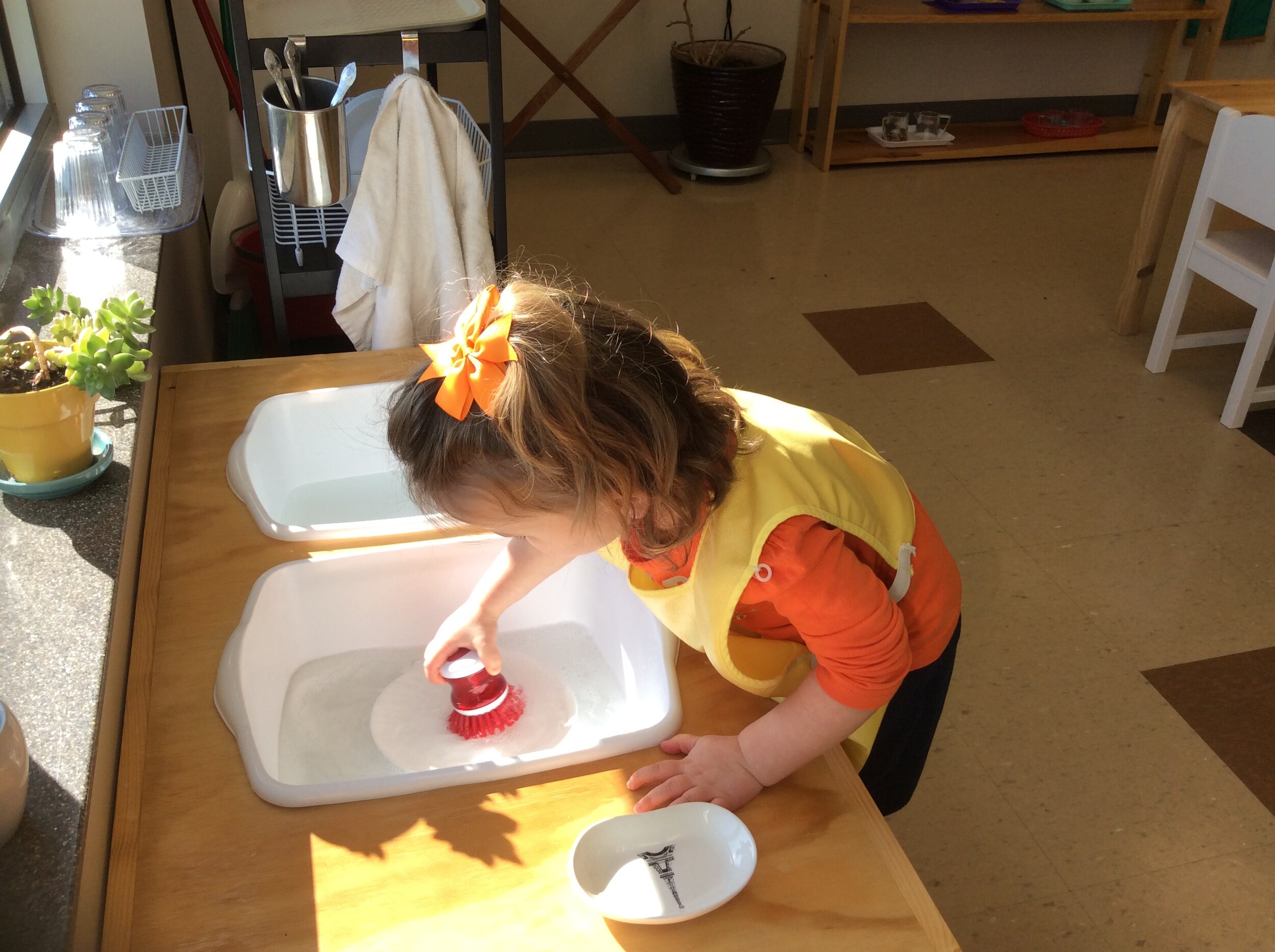
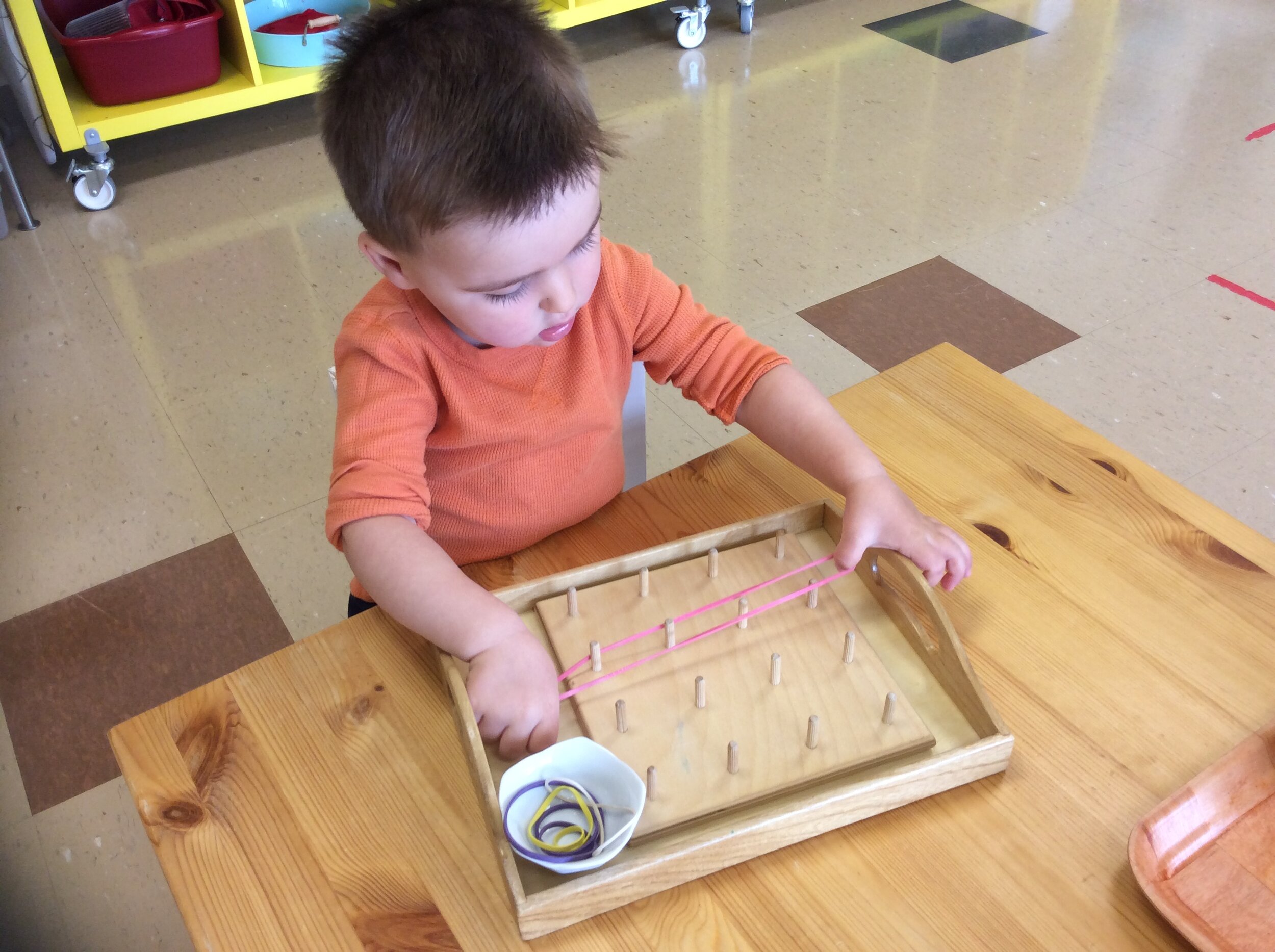
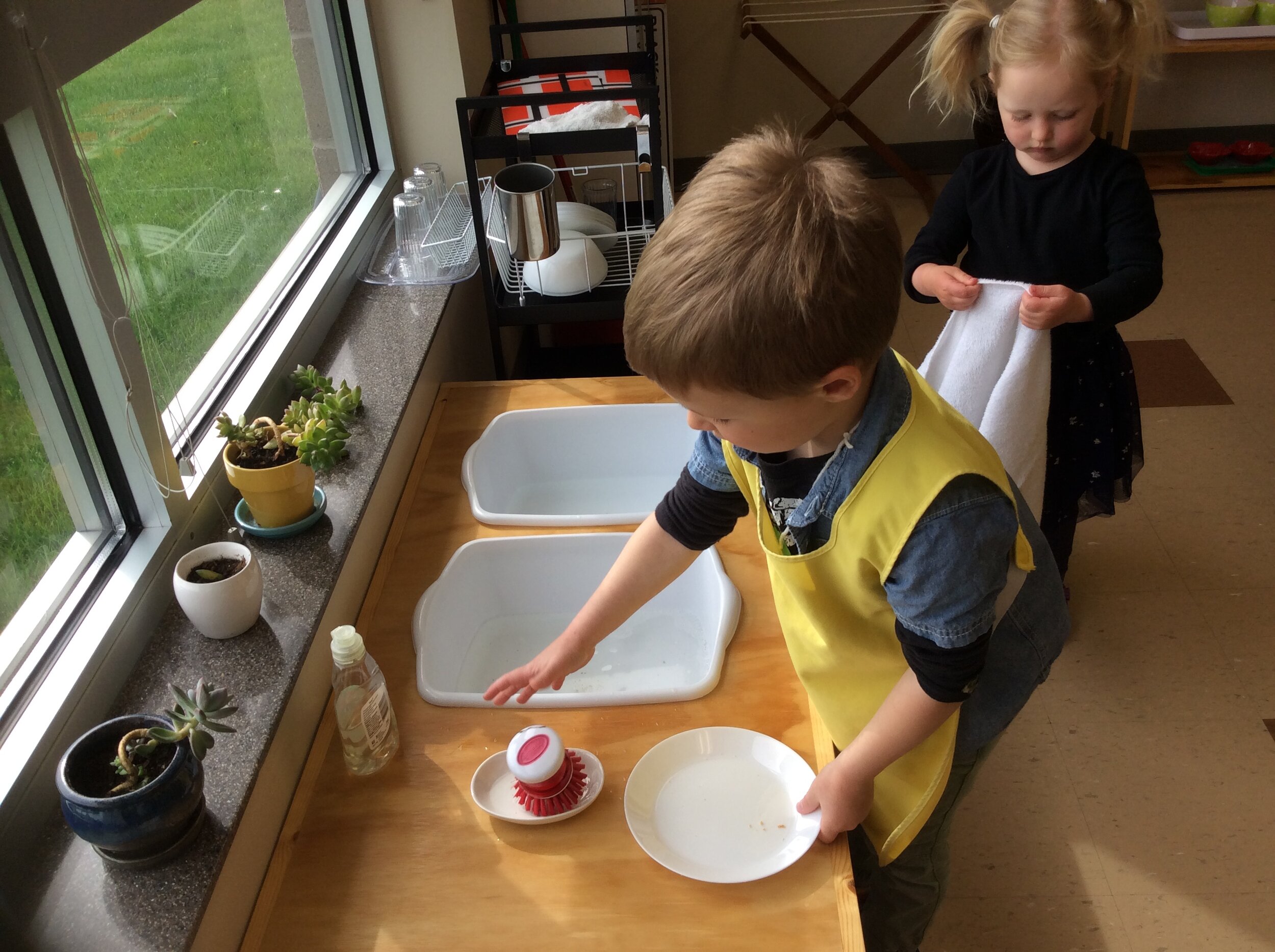
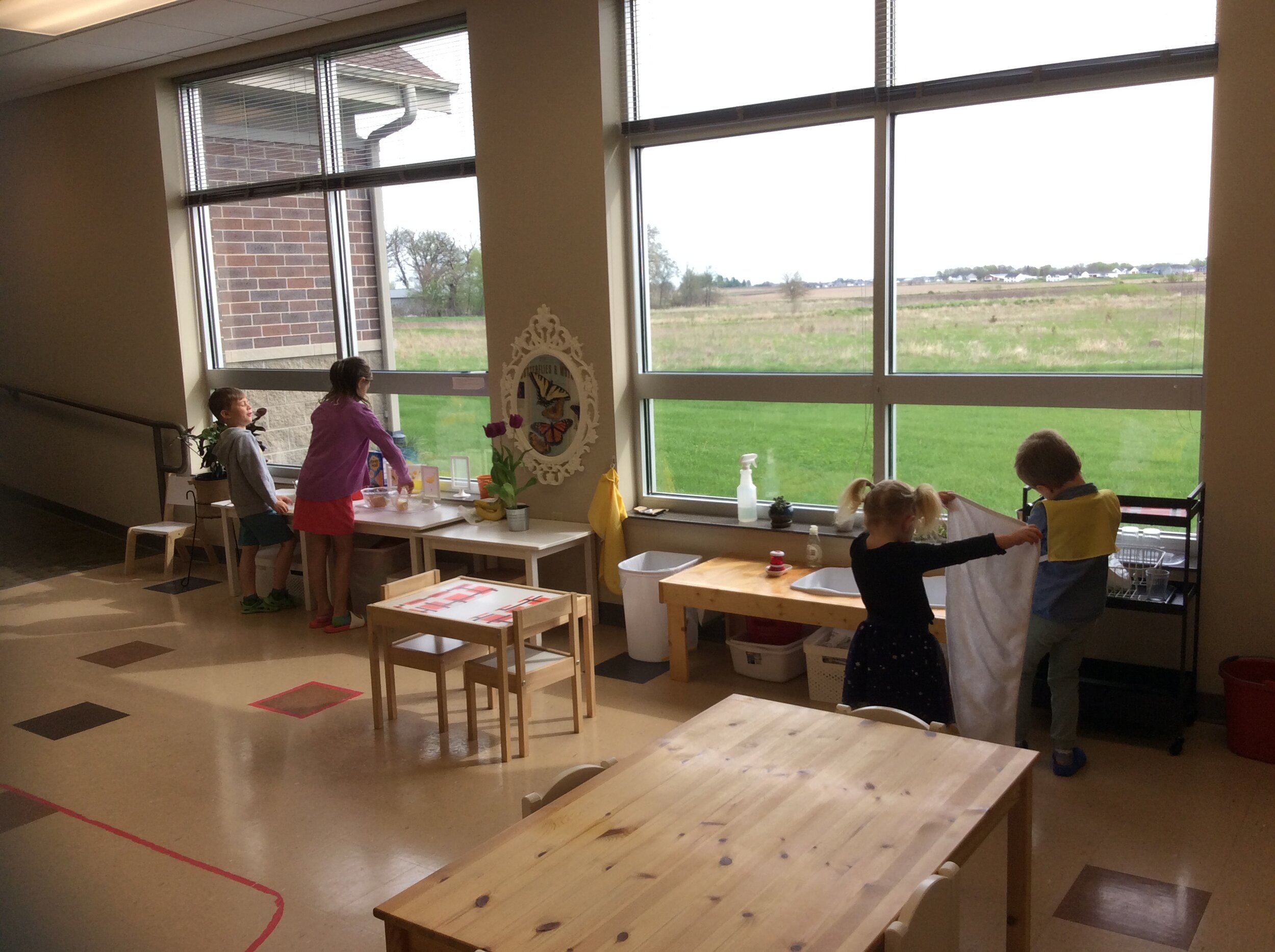
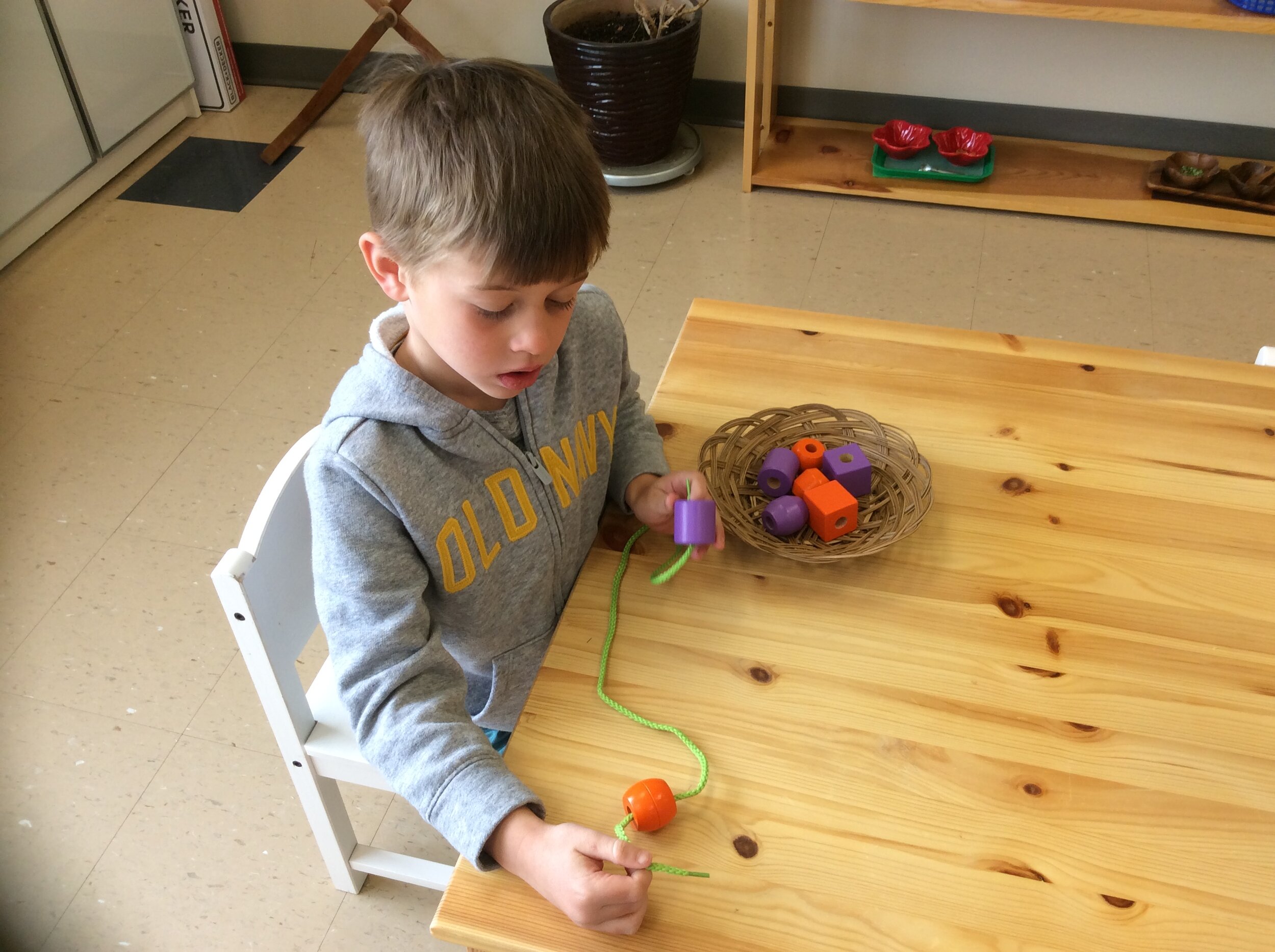
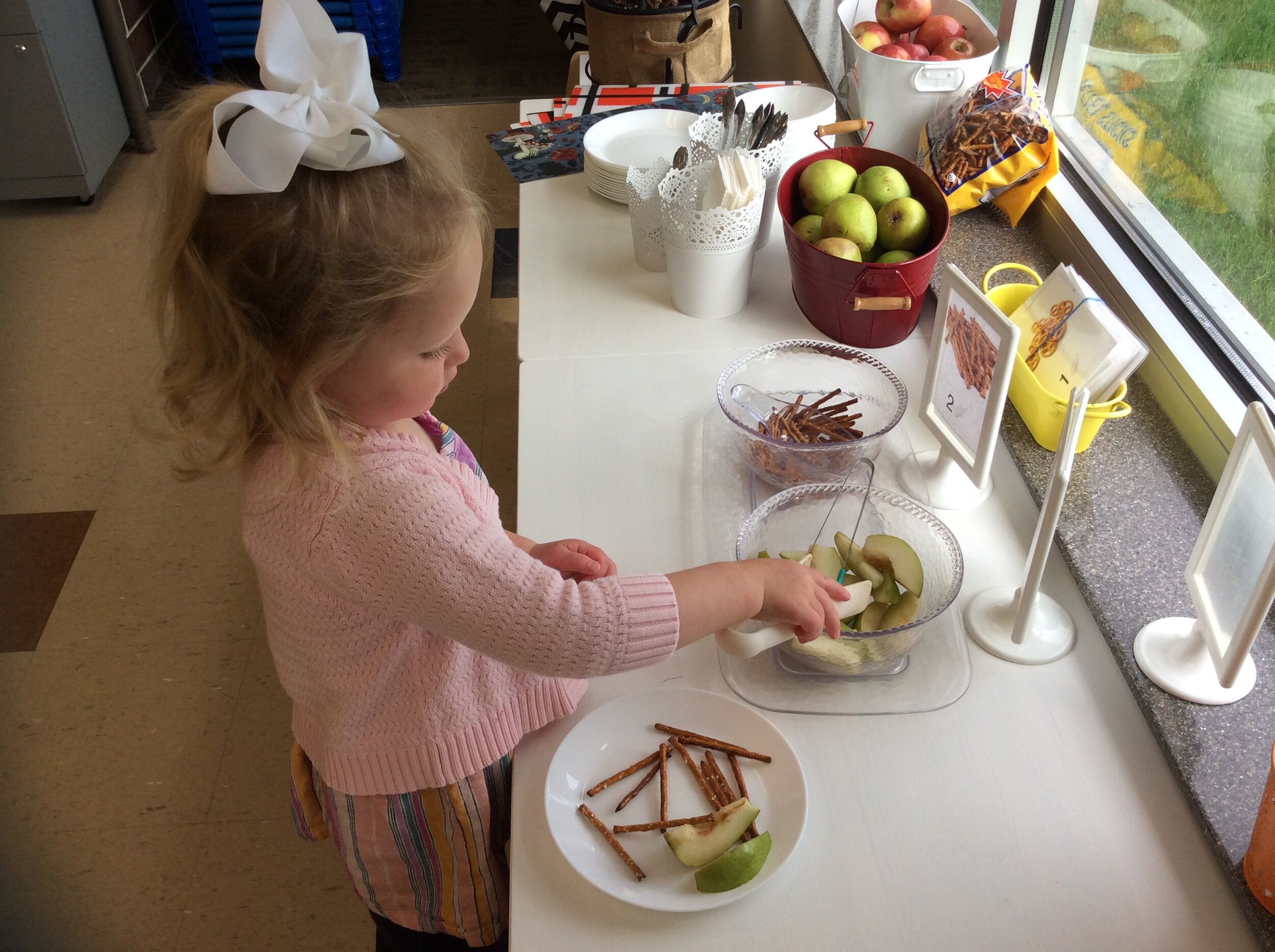
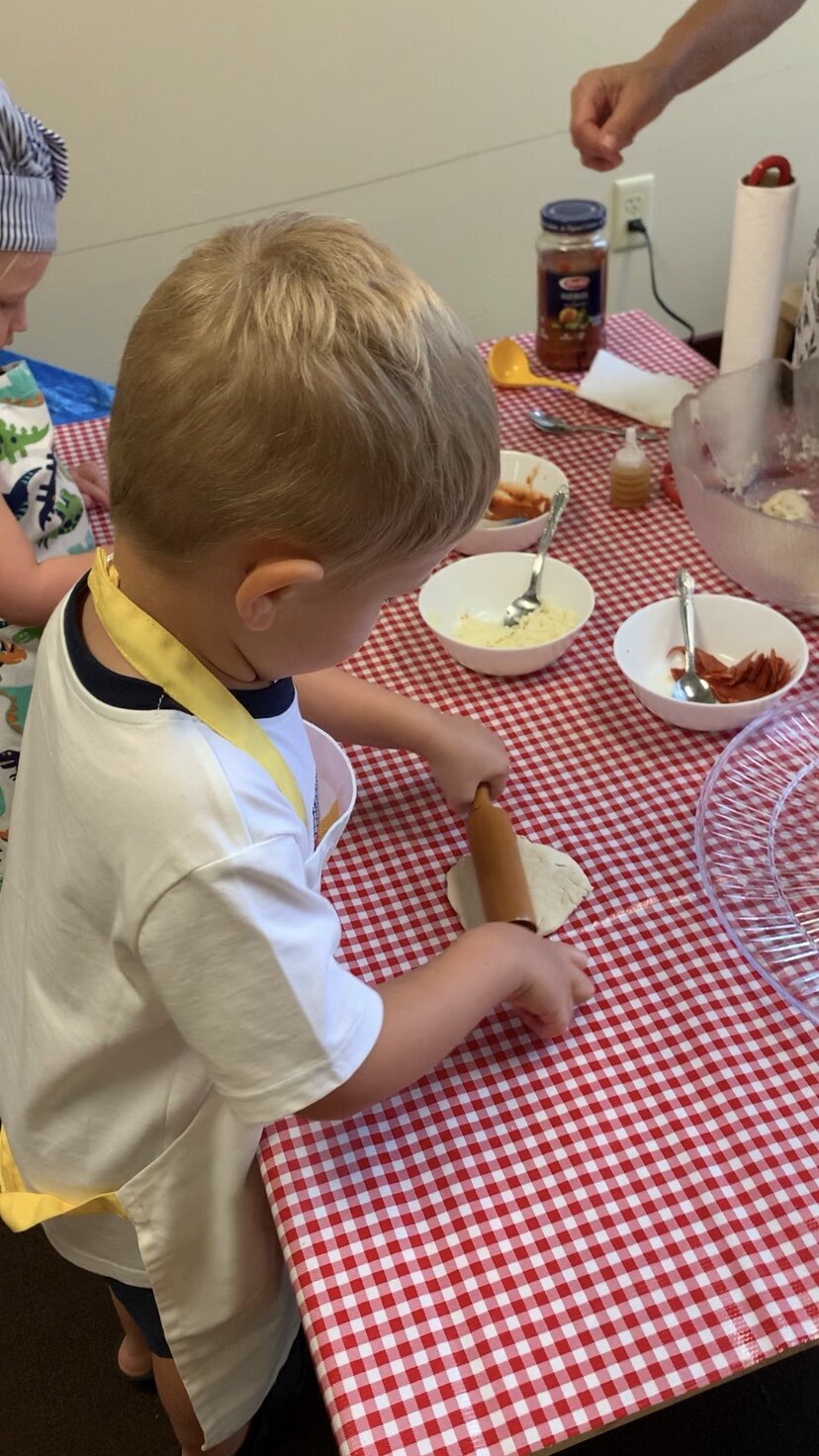
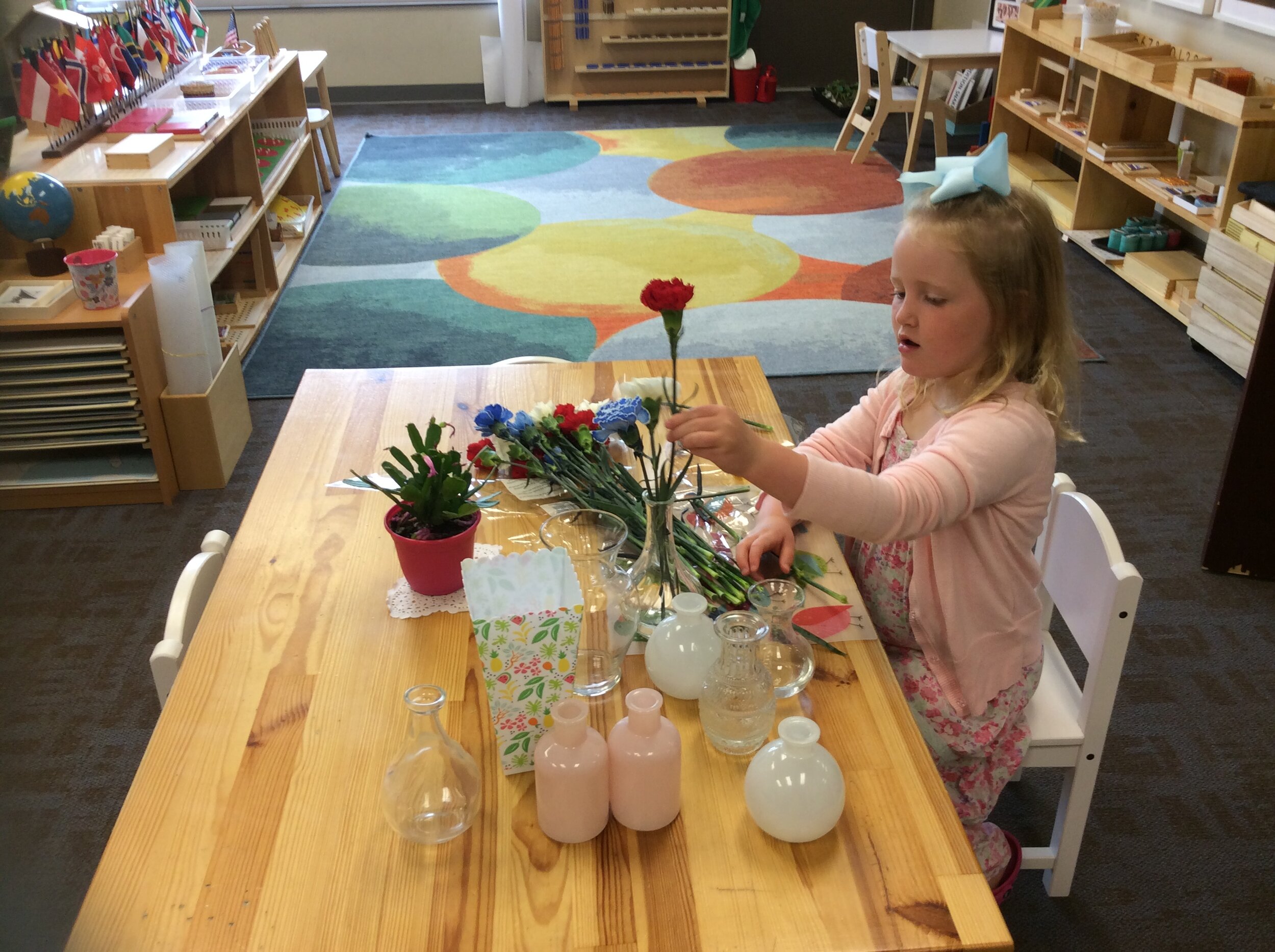
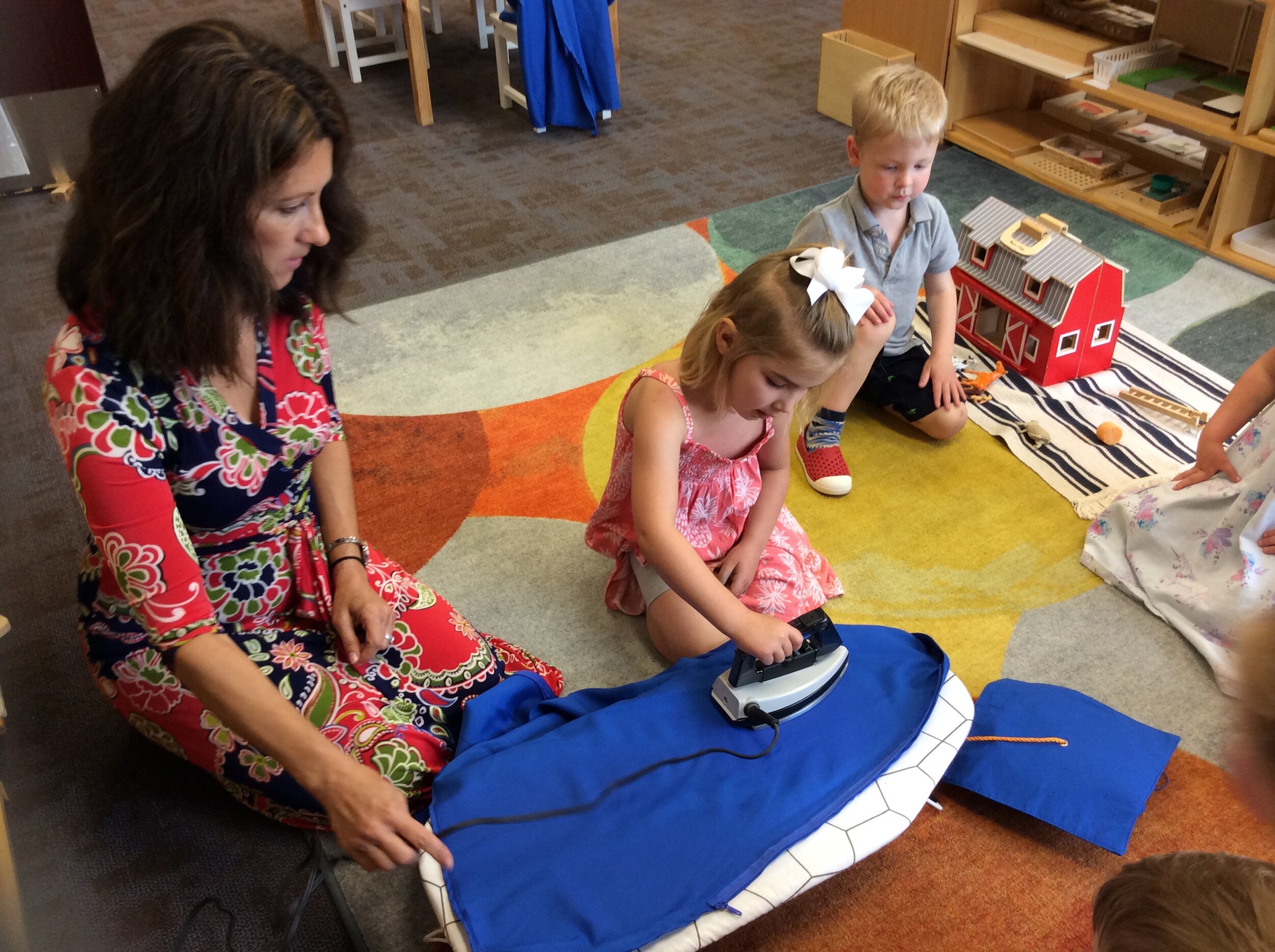
This area of the Montessori curriculum prepares the child for all other areas. Children refine their fine motor skills, hand-eye coordination, hand strength (helps with writing), balance, coordination, independence, and depth perception (which later helps with reading). The skills they learn here will carry on with them all their lives. Examples of practical life exercises are: pouring, transferring, scooping, lacing, flower arranging, food preparation, serving, washing, polishing, folding, etc.

Abigail, 3 years old - Pink Tower
4. Sensorial:
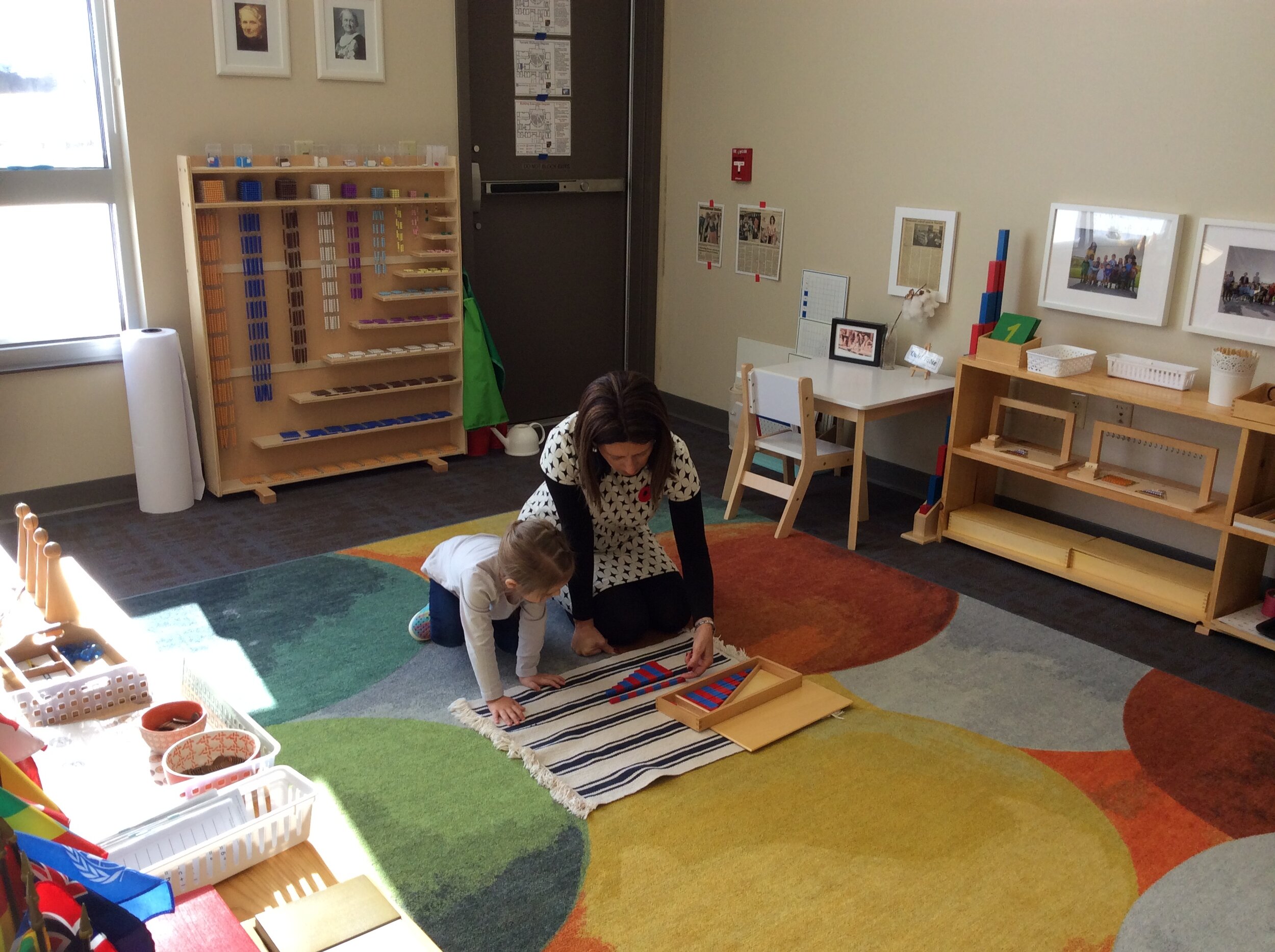
This area involves activities assist children in refining their skills and becoming good observers of the world. The materials in the sensorial area incorporate all the senses. They help children learn about qualities like color, size, shape, length, texture, sound, and smell. Some of the materials in this area are Knobbed Cylinders, Color Tablets, Rough and Smooth Boards, Geometric Solids, Pink Tower, Binomial Cube, Smelling Bottles, Thermic Tablets and more.
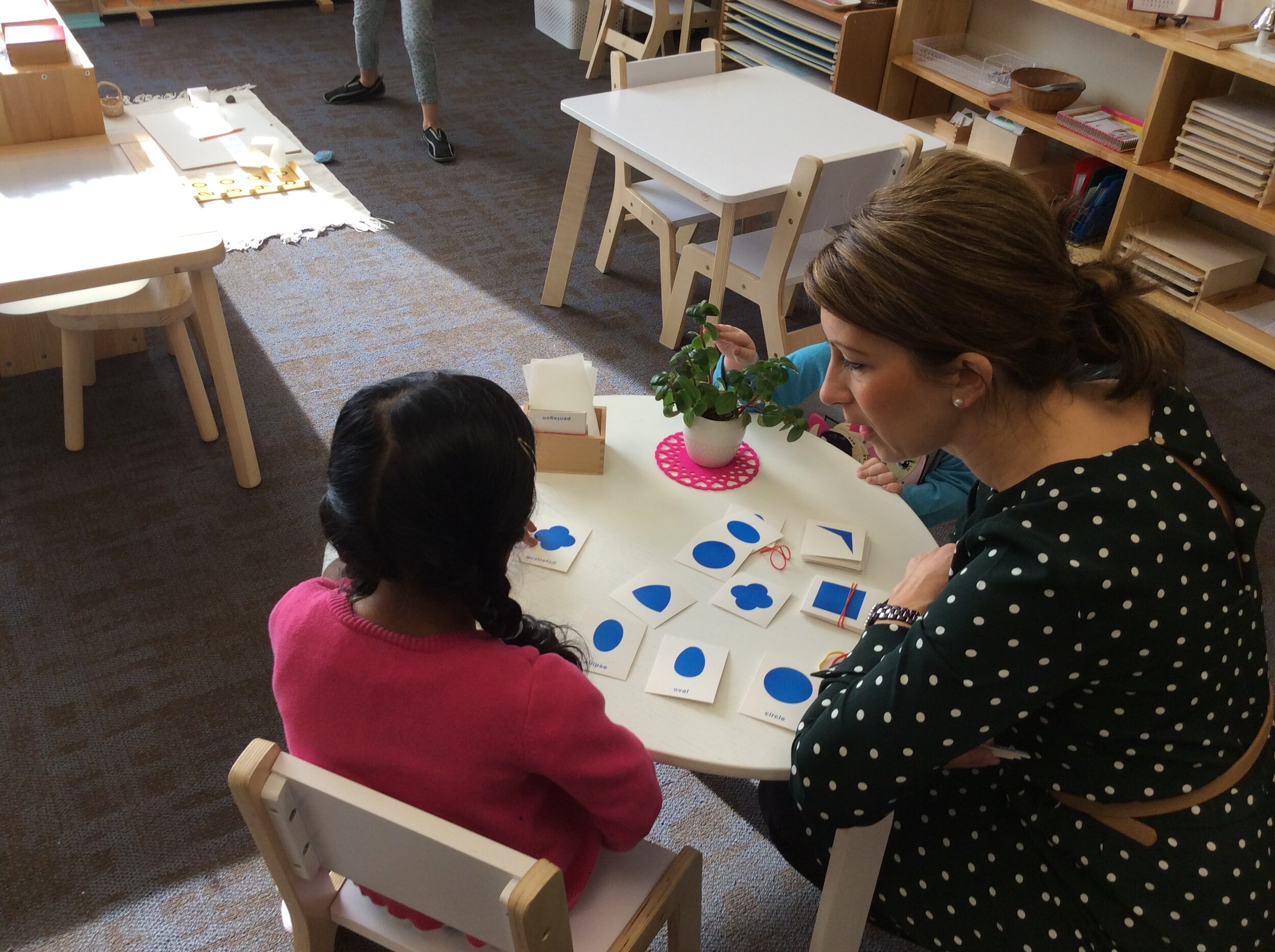
5. Language:
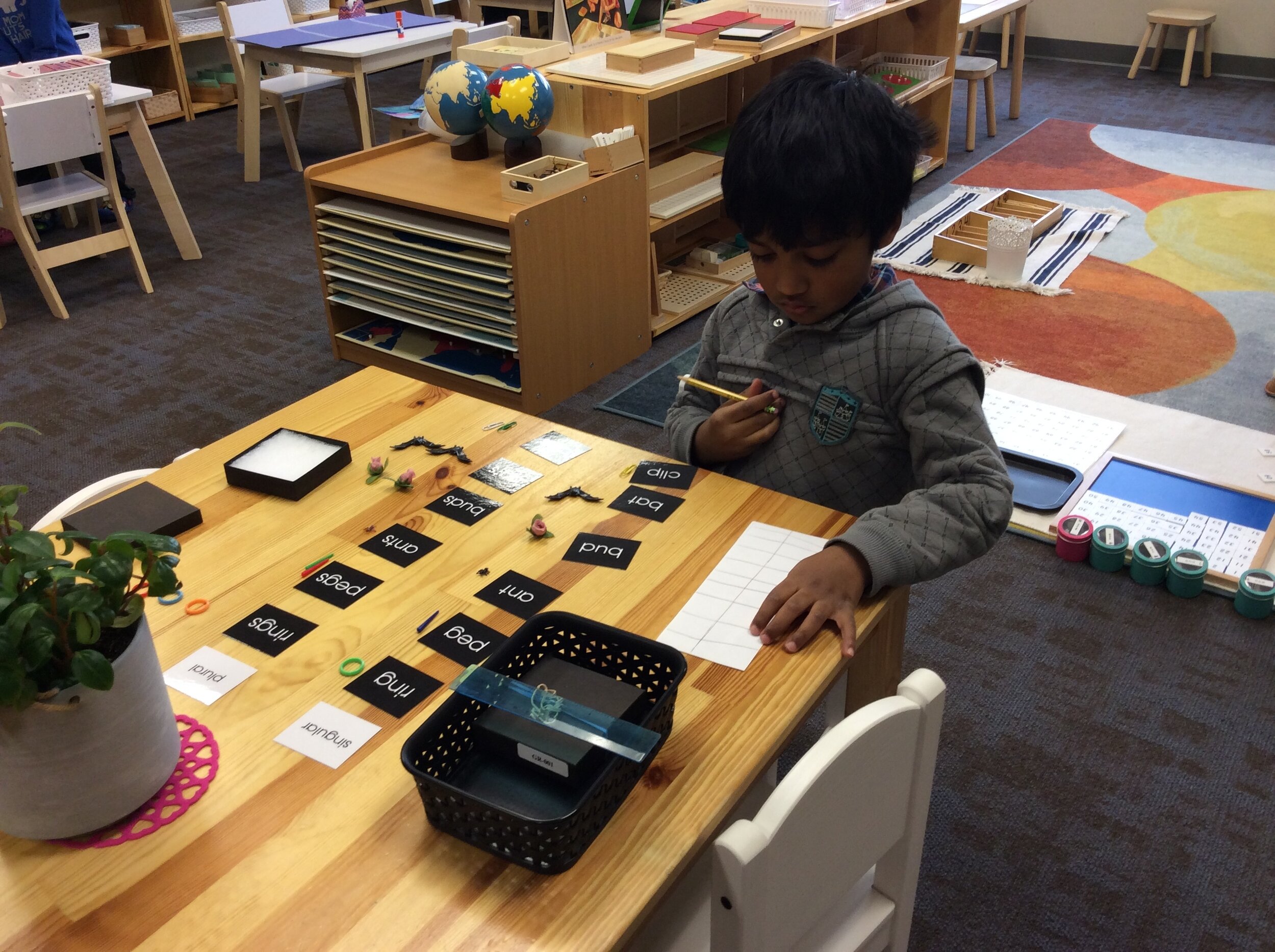
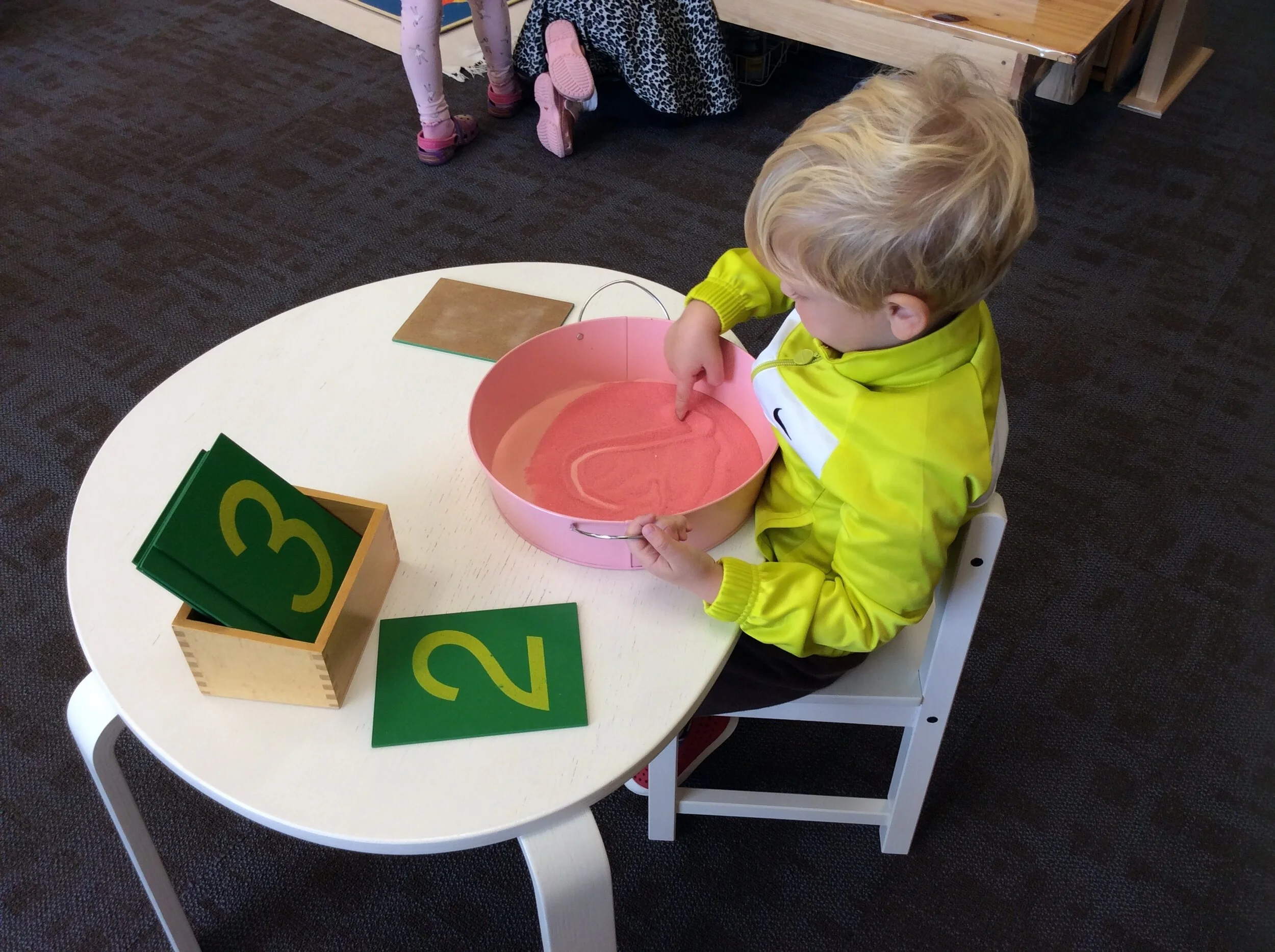
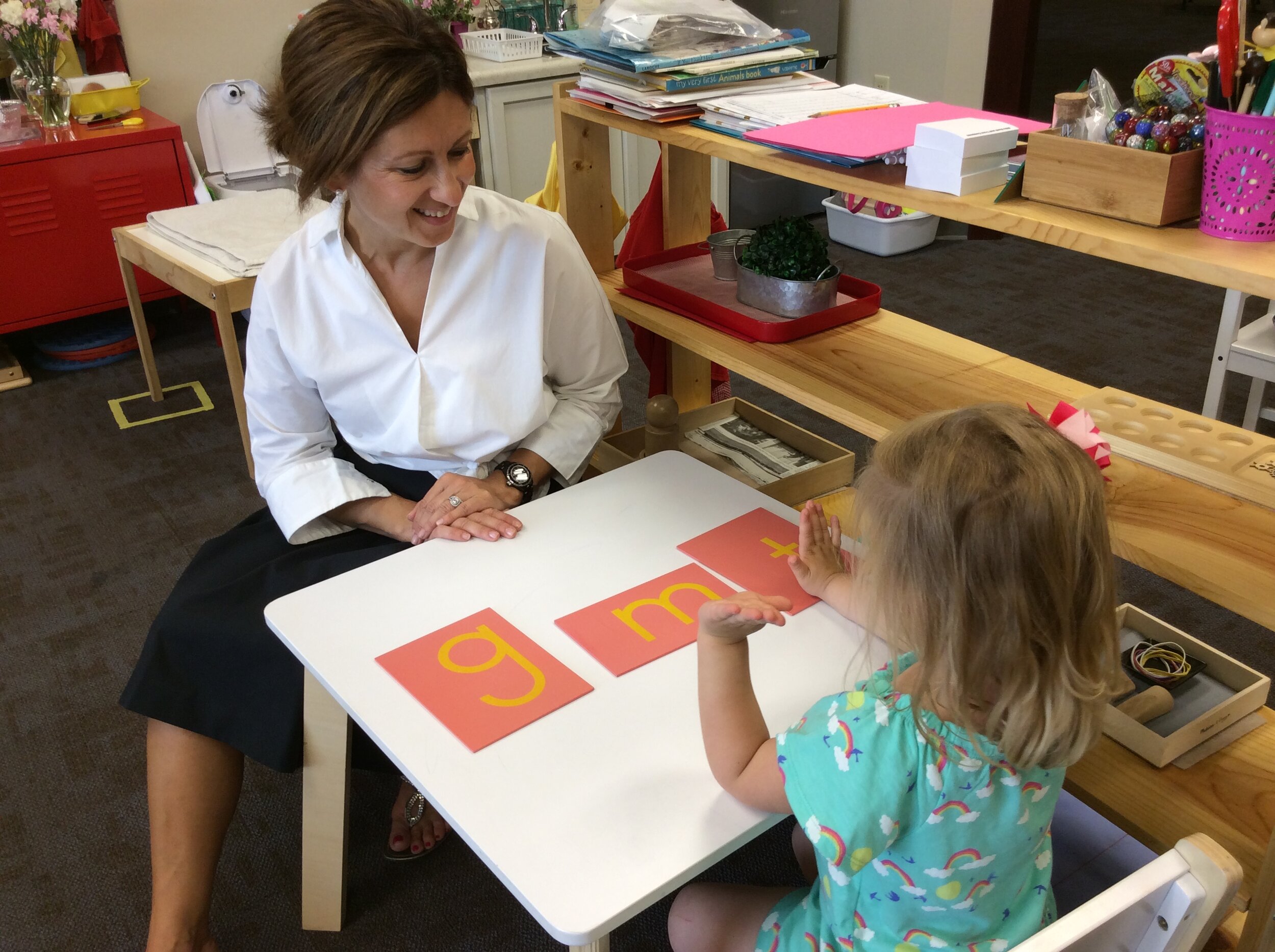
This area involves materials that are tactile, taking advantage of the 3 and 4 year olds child's sensitivity to learning through touch. The child is introduced to the names of the objects and then taught to recognize the letter sounds and beginning/ending/middle sounds. Writing often comes early to the Montessori child through the use of small objects and Moveable Alphabet, allowing the child to express his/her knowledge without needing precise control of the pencil. The child advances through the Pink, Blue, and Green materials at their own pace, then furthers their knowledge through learning parts of the sentence with grammar games. All children read Early Readers books by the time they are 6 and some advance to chapter books.

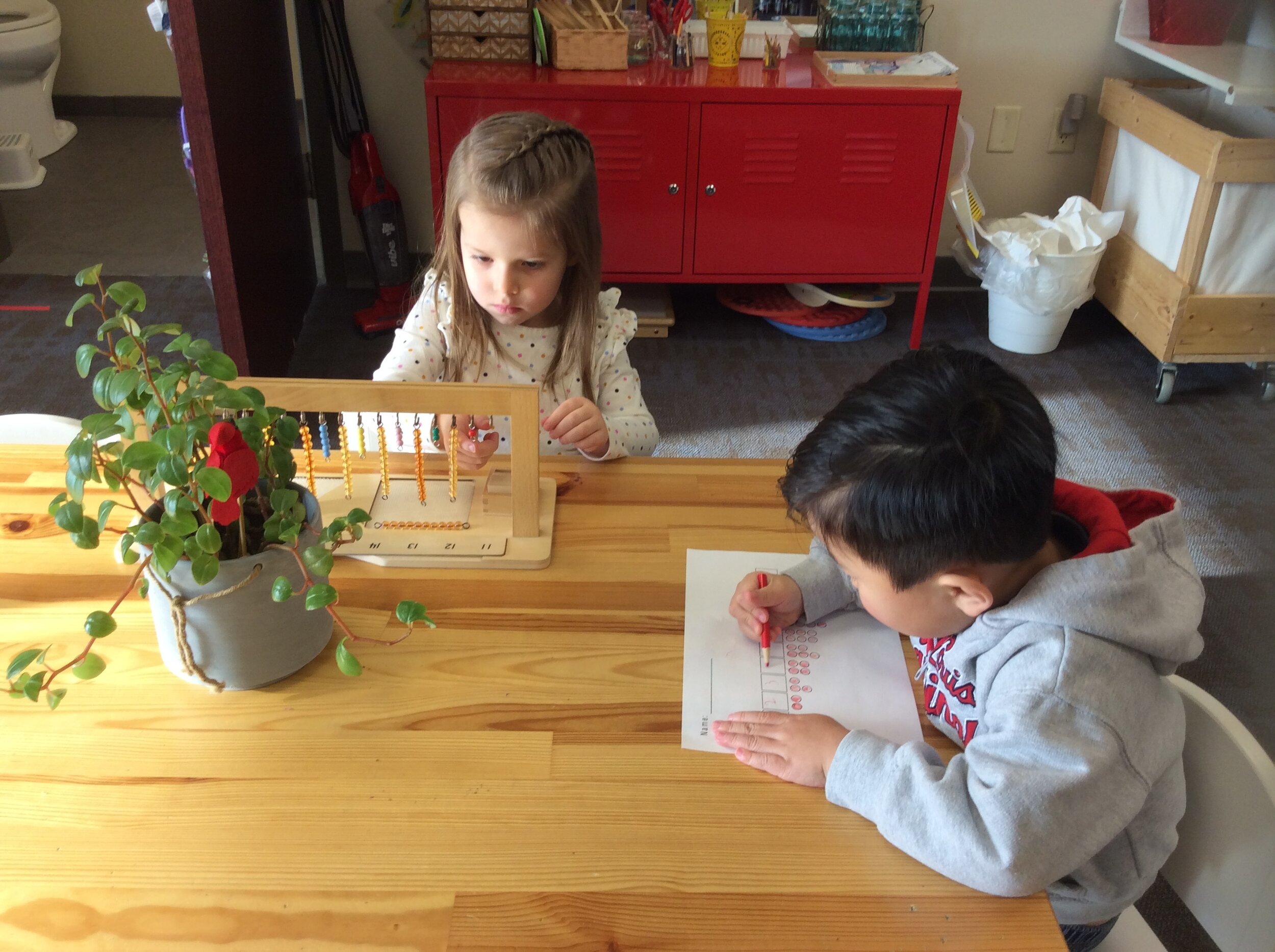
Jonah, 3.5 years old - Teen Tablets
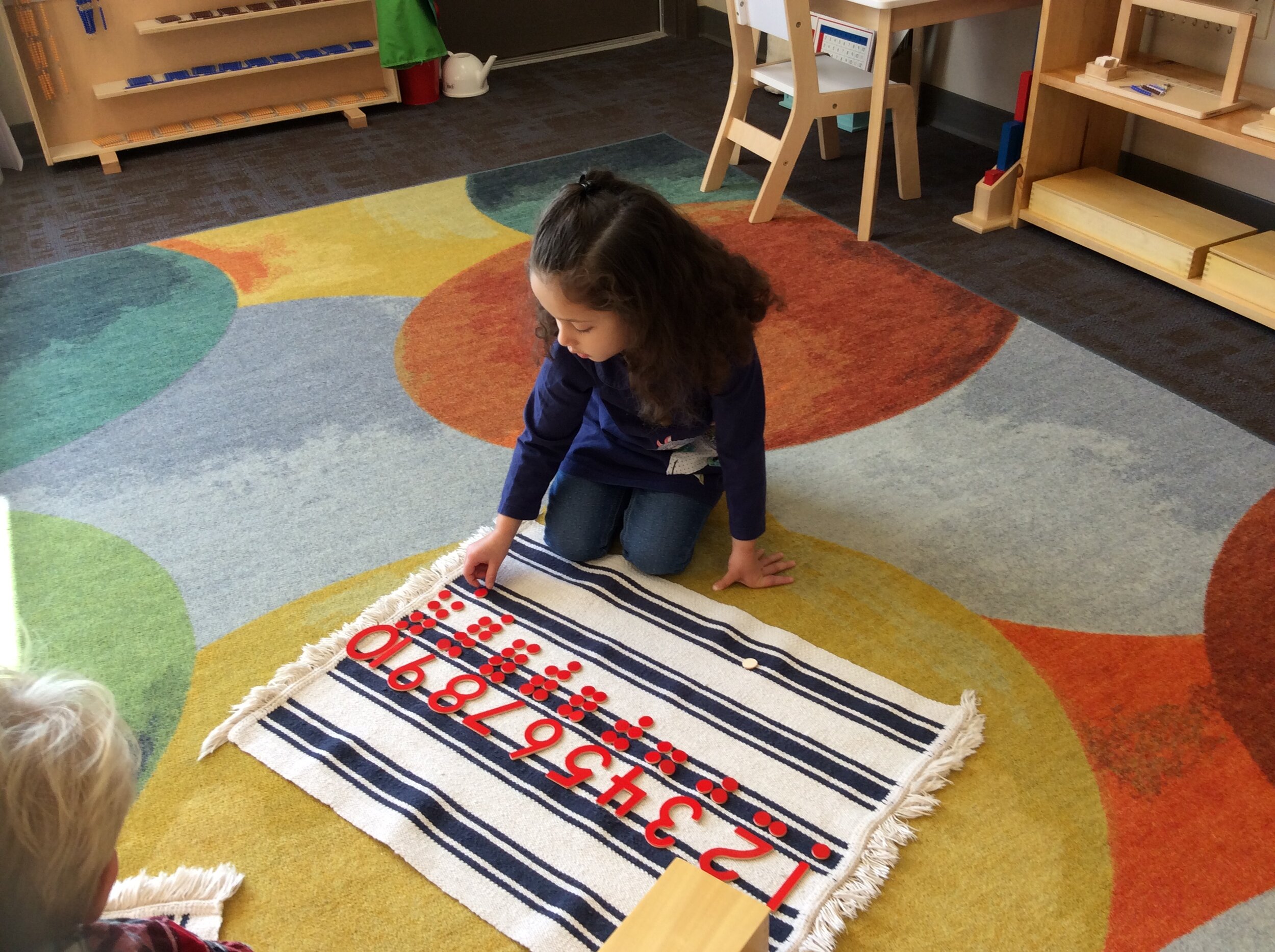
6. Math:
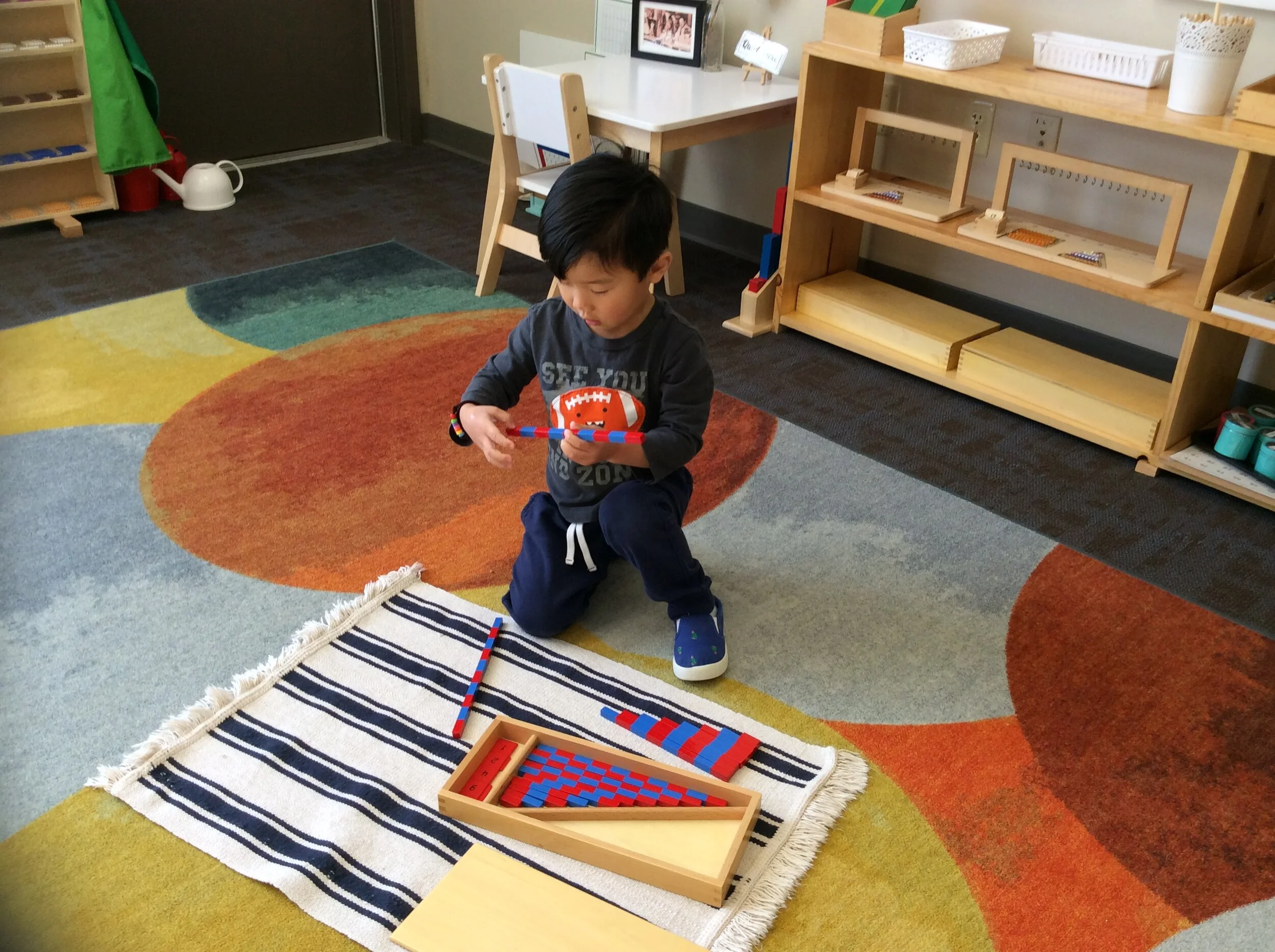
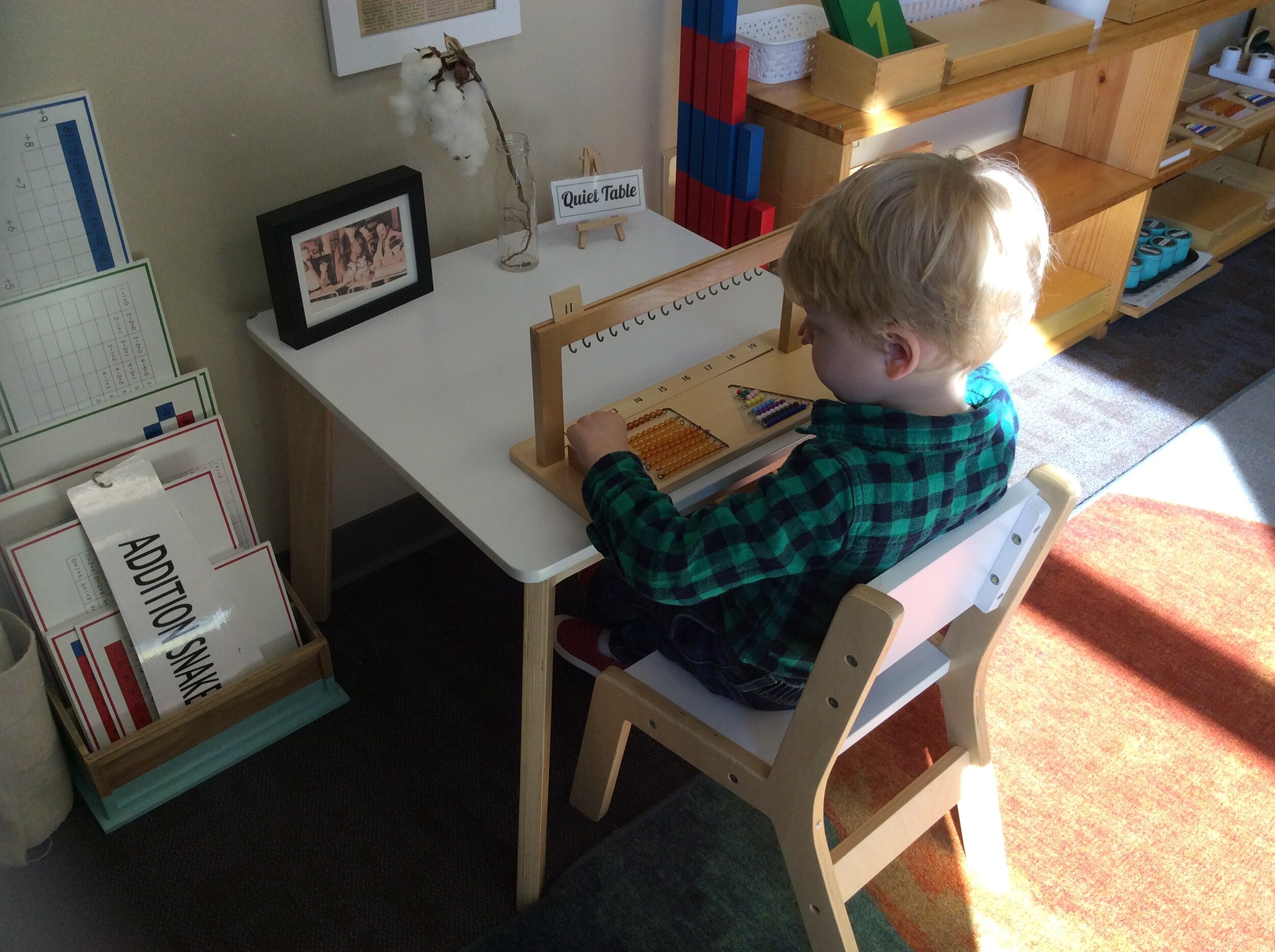
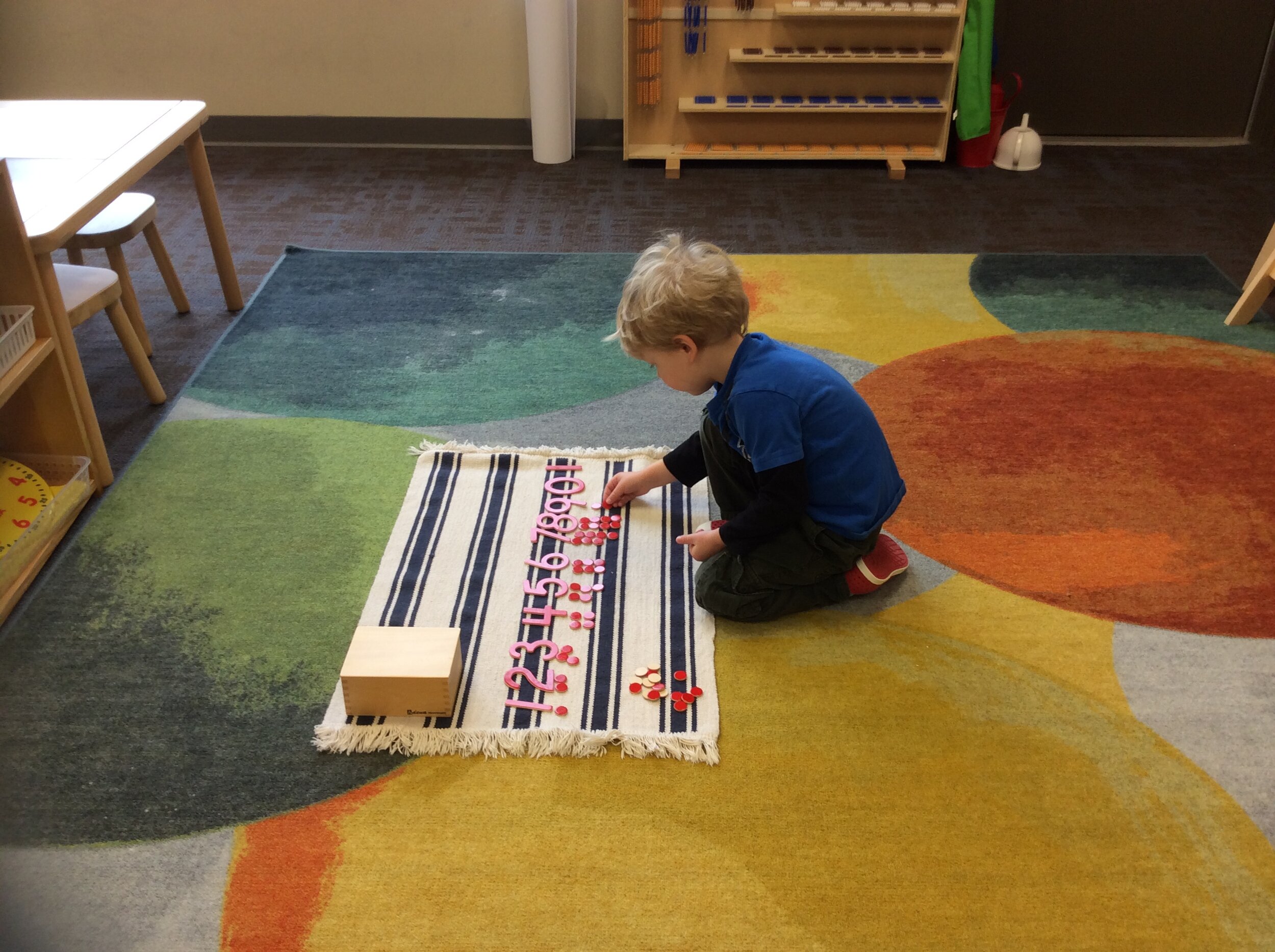
This area involves materials that are not boring or difficult but that continue the sensorial approach. Children are introduced to concrete lessons first. Then once they are comfortable with the concepts, they will be presented with more abstract work. Children will be introduced to quantity, then symbol, then symbol and quantity together, and then the decimal system. The exercises begin simply and progress to include the process of addition, subtraction, multiplication etc. The bead cabinet introduces the child to counting by 2s, 3s, 4s, etc. This later helps them with multiplication.
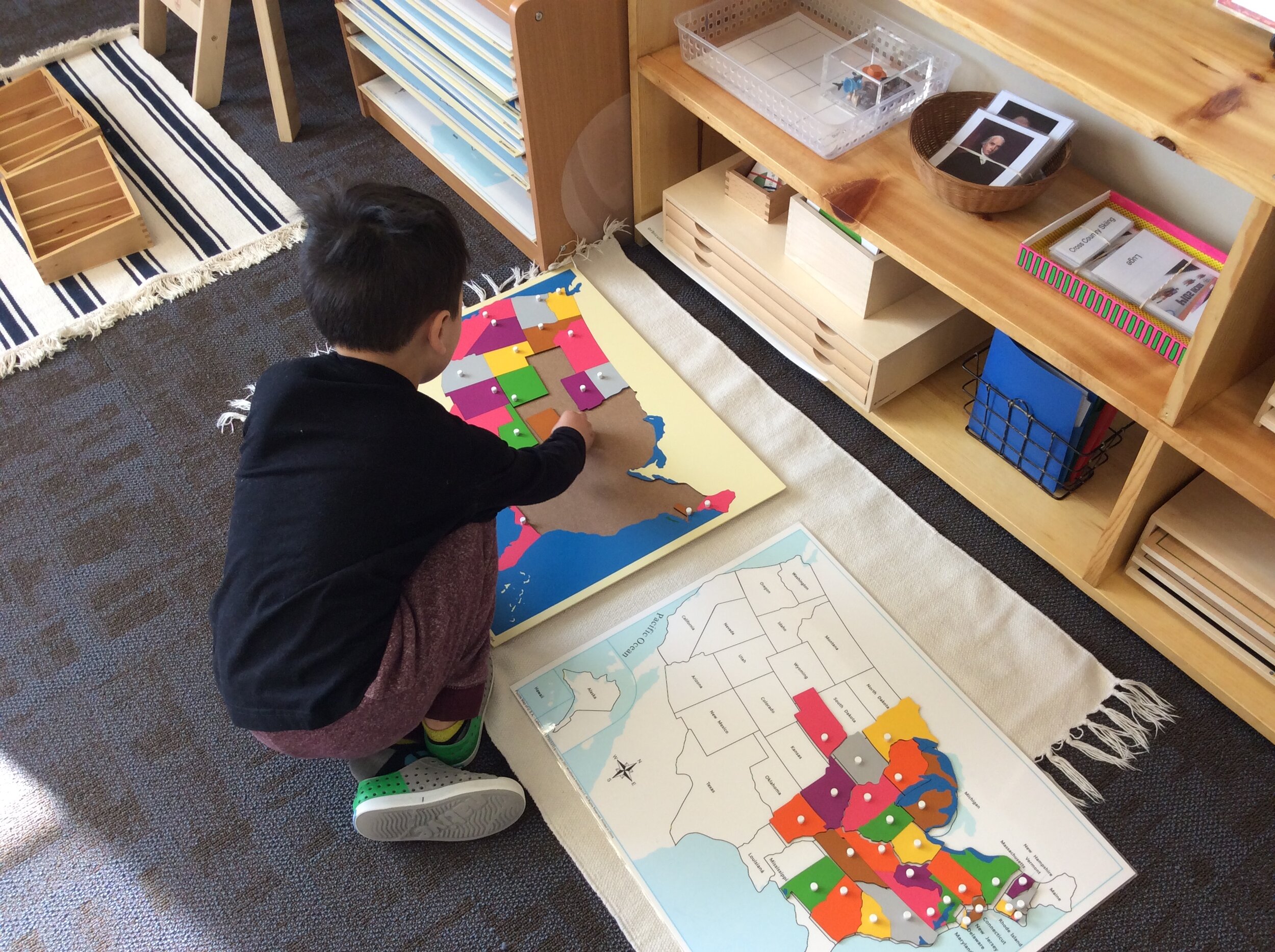
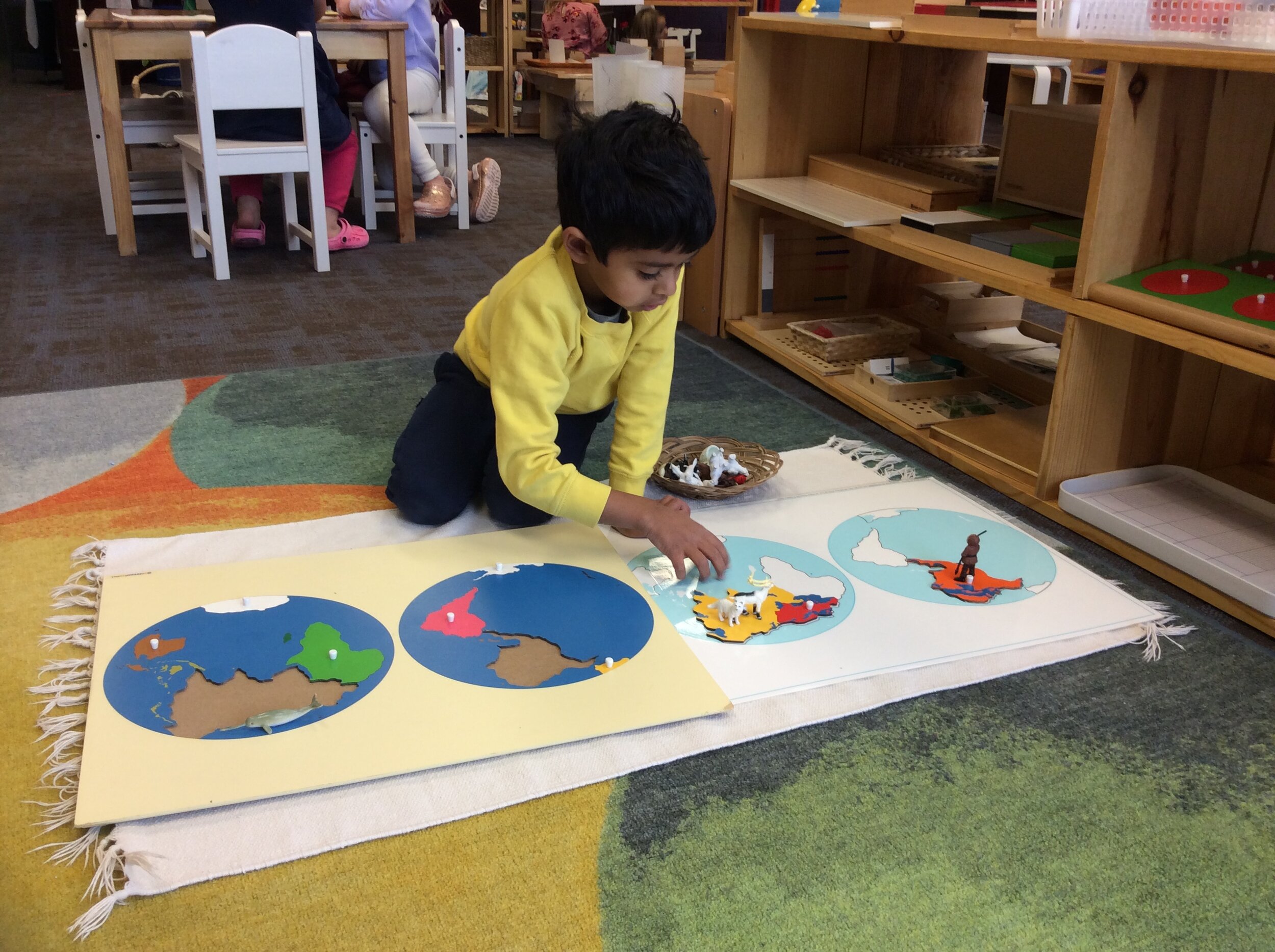
7. Geography/Cultural:
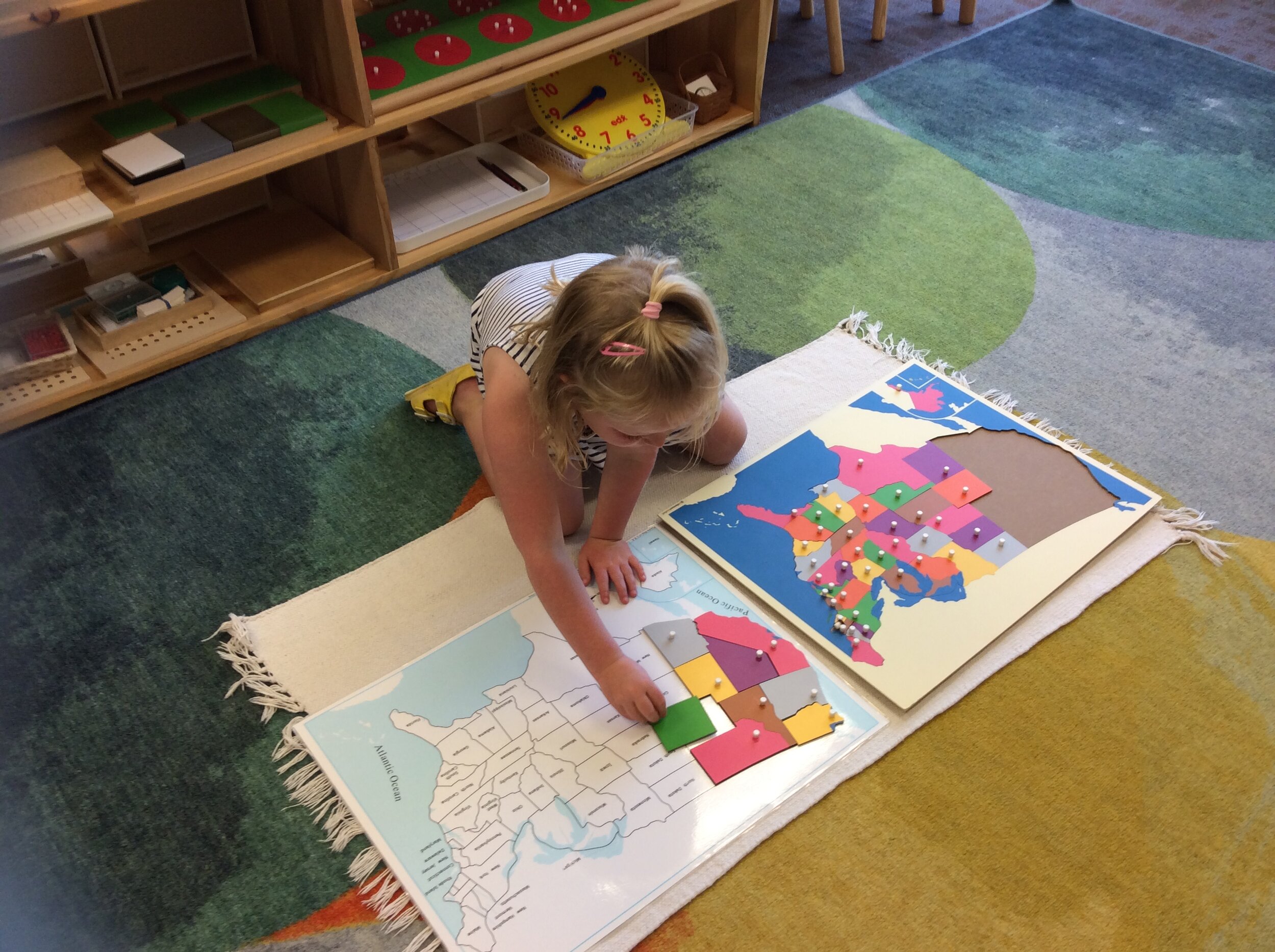
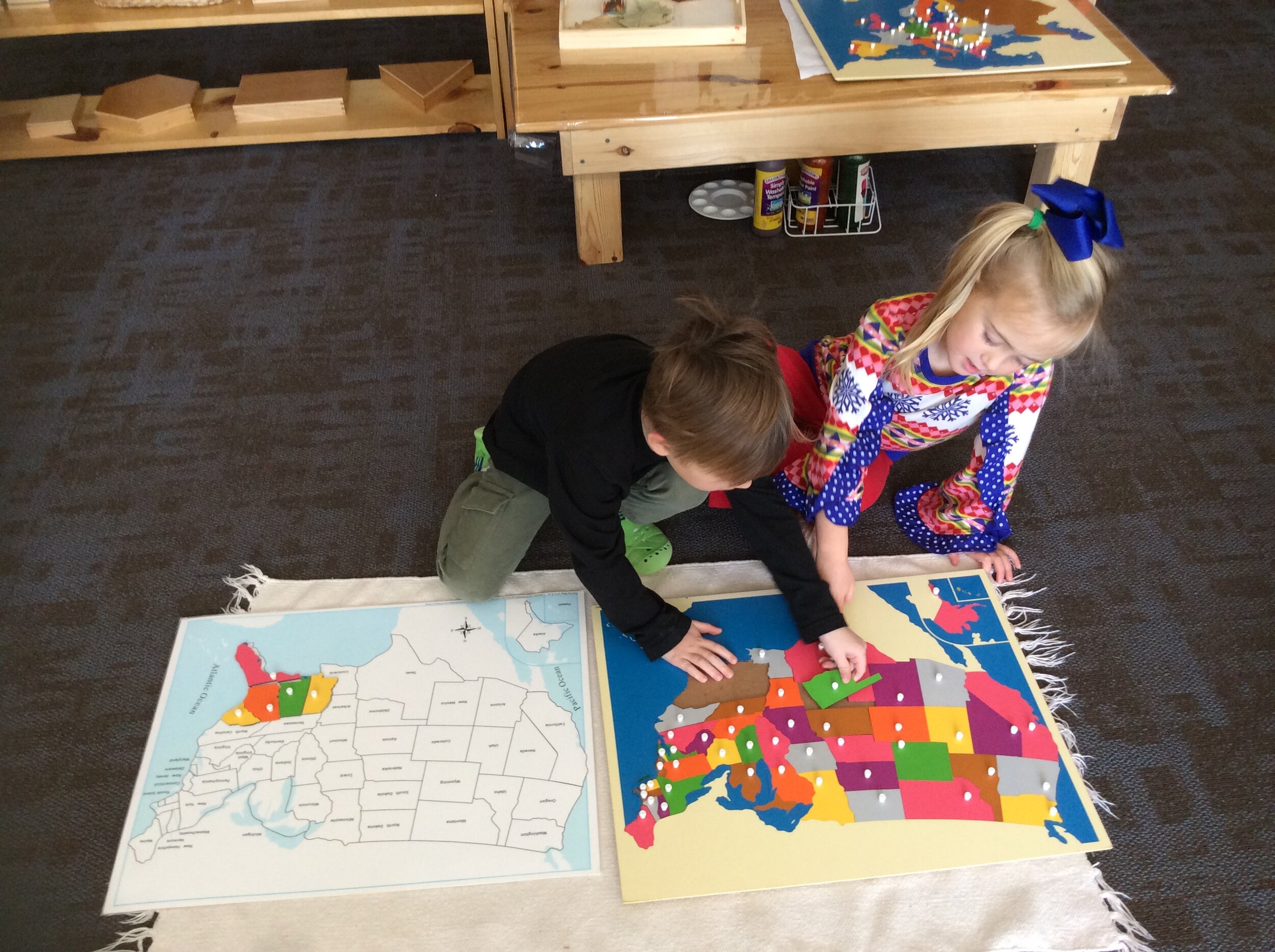
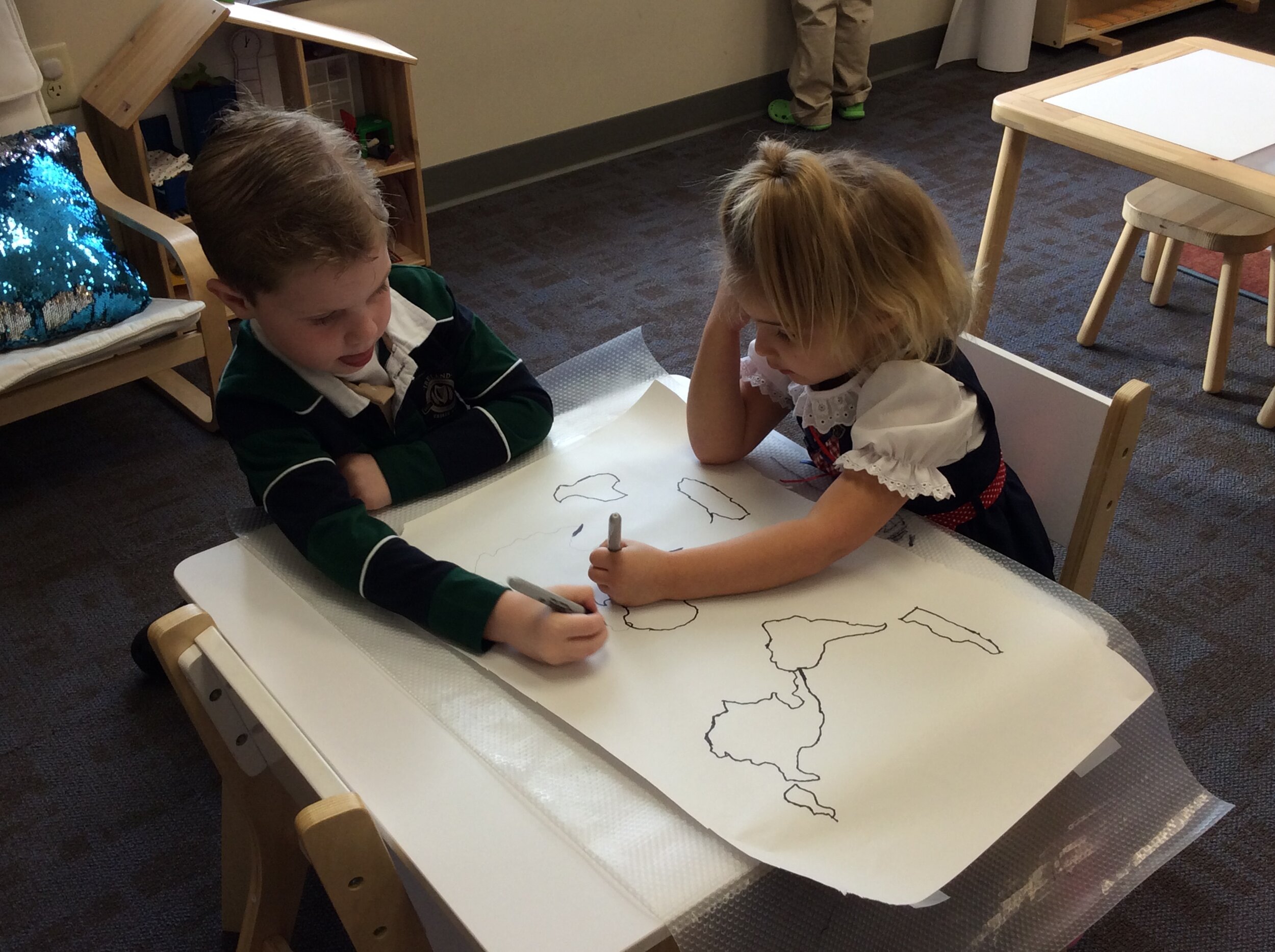
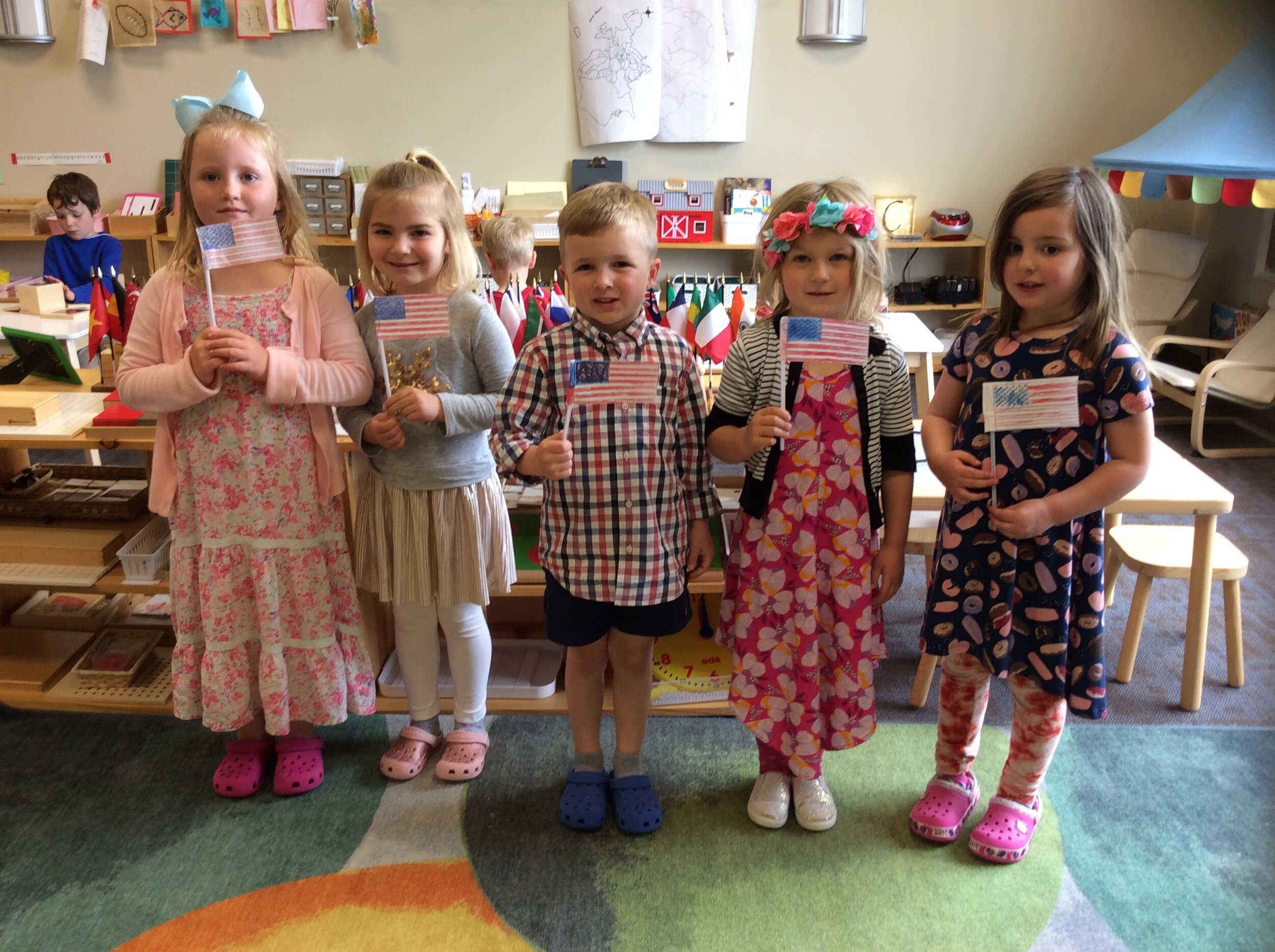
This area introduces a very important part of the Montessori curriculum. Children first learn the basics, such as sandpaper globe (land and water) and then move on to maps of continents and their names, countries represented in each continent, culture, climate, fauna, etc. They are taught to recognize flags from different countries. They use wooden puzzle maps and the older children will make their own maps and label them with their own handwriting.
8. Science and Nature:
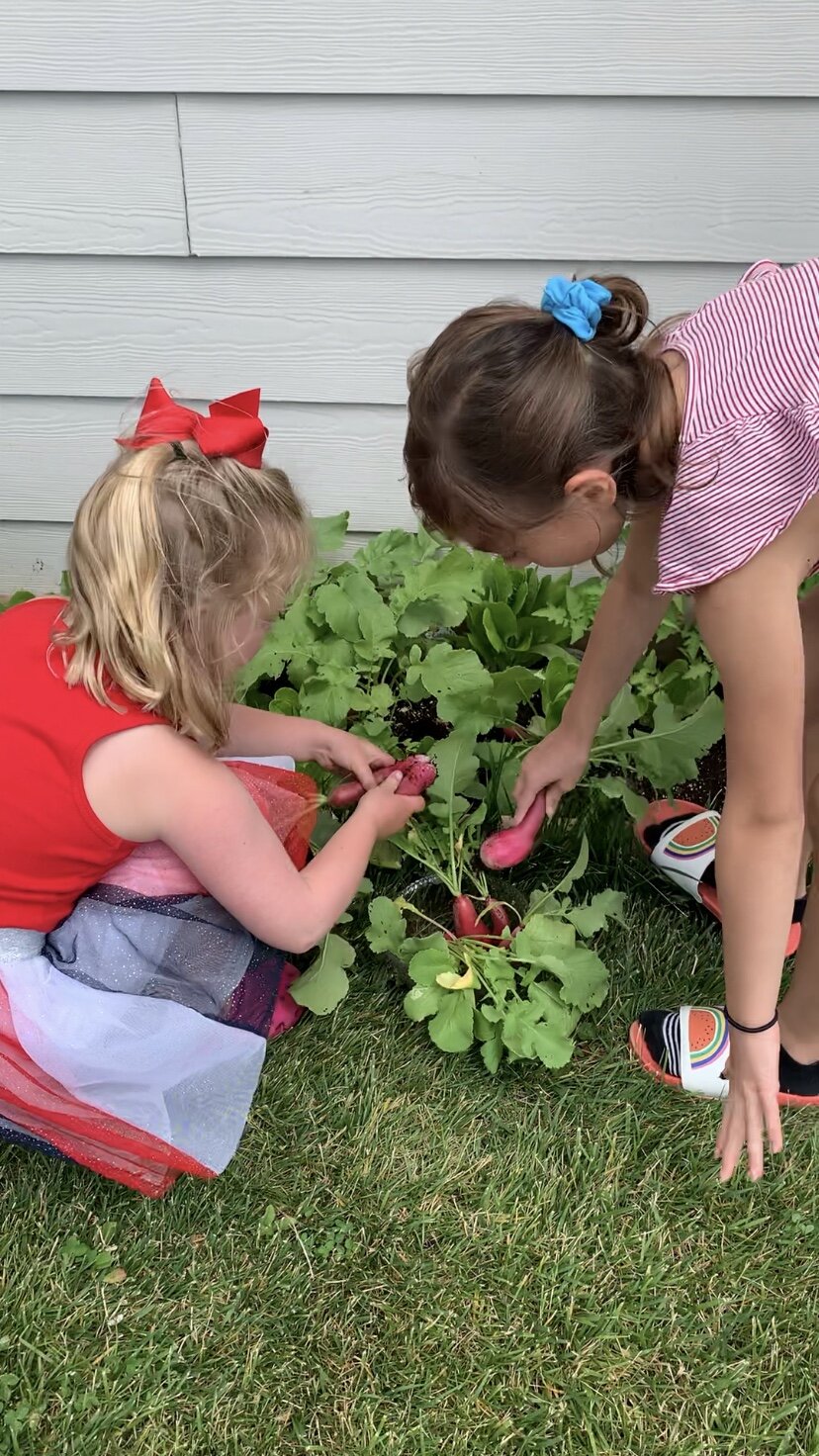
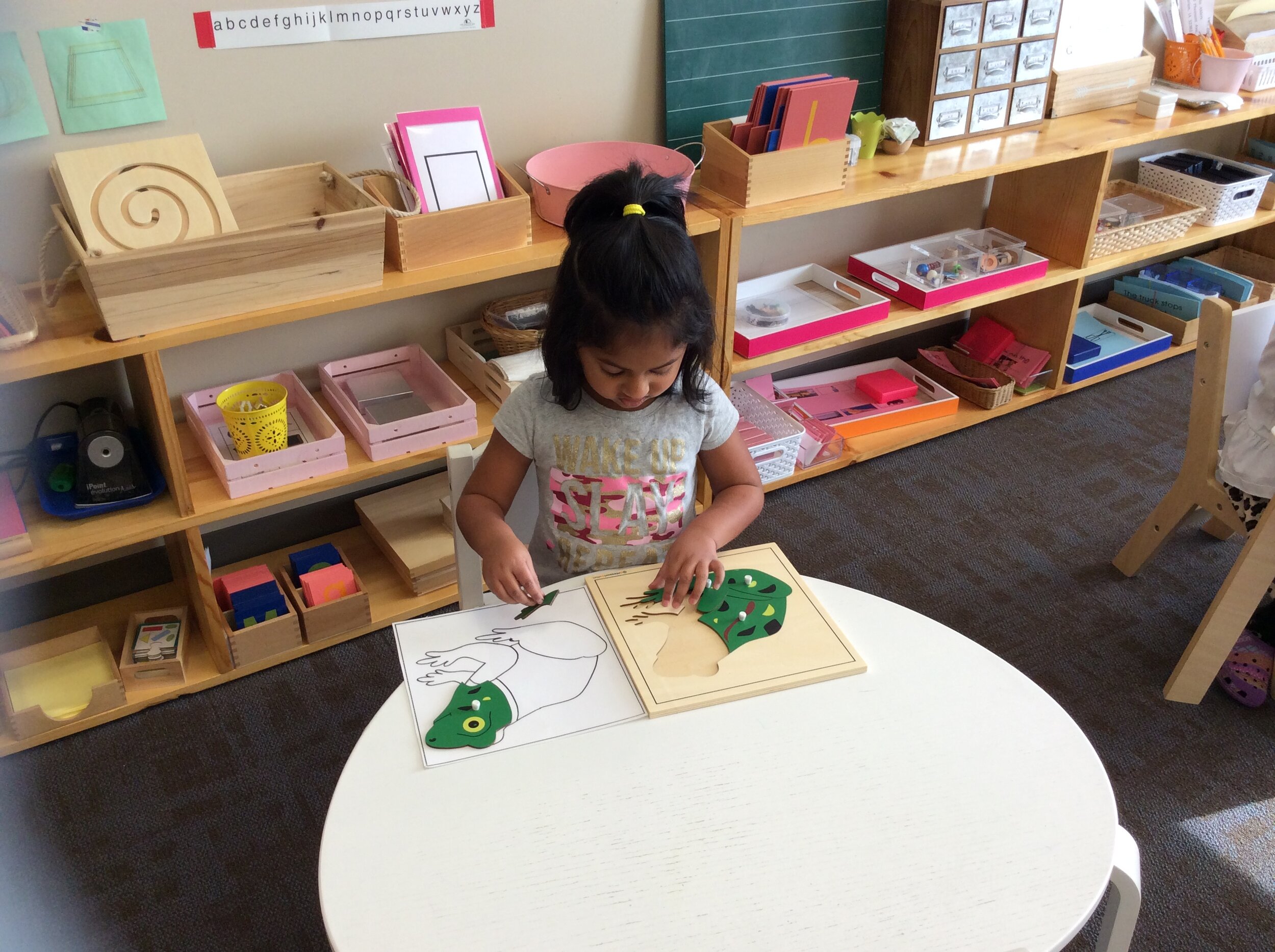
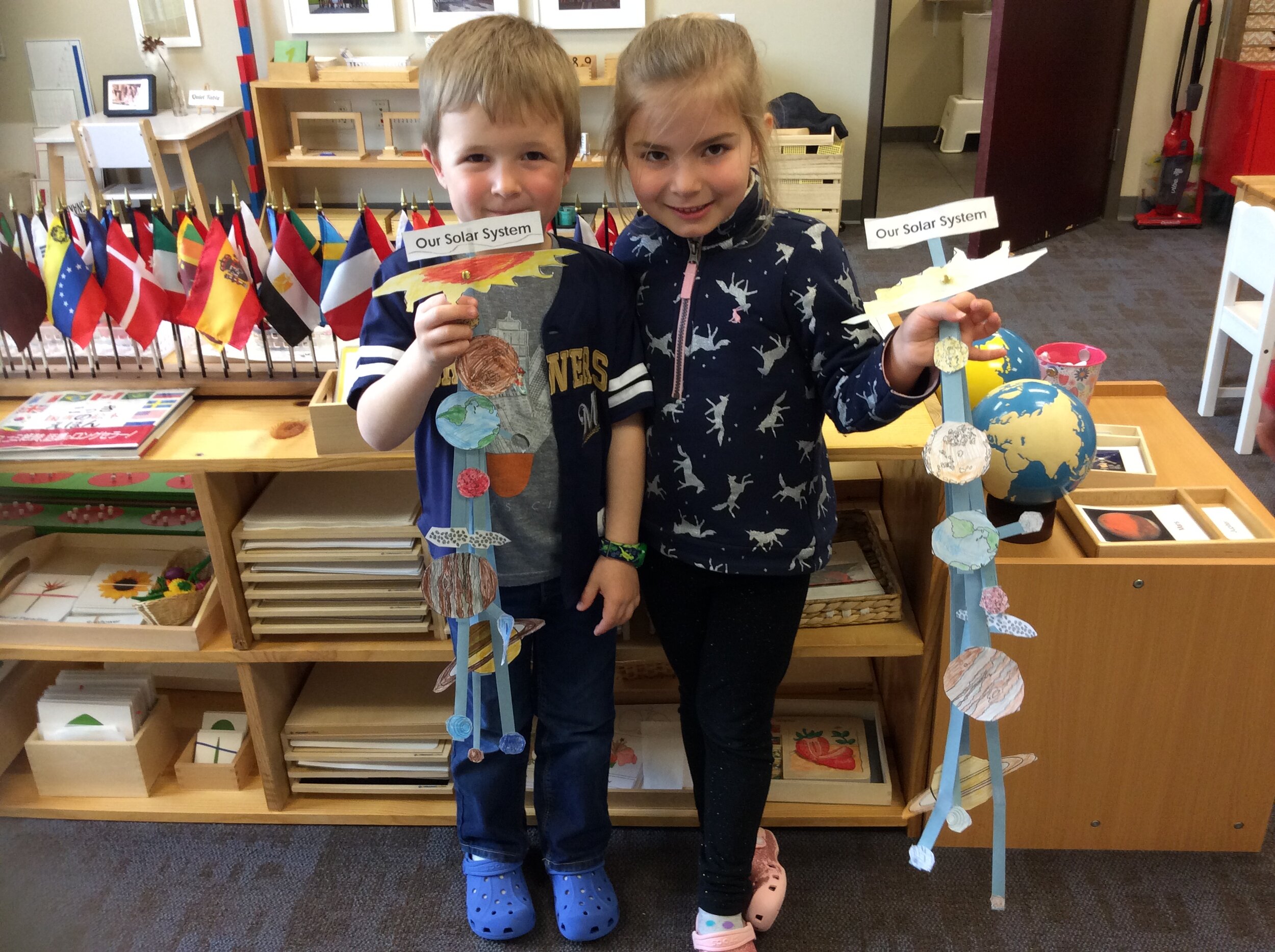
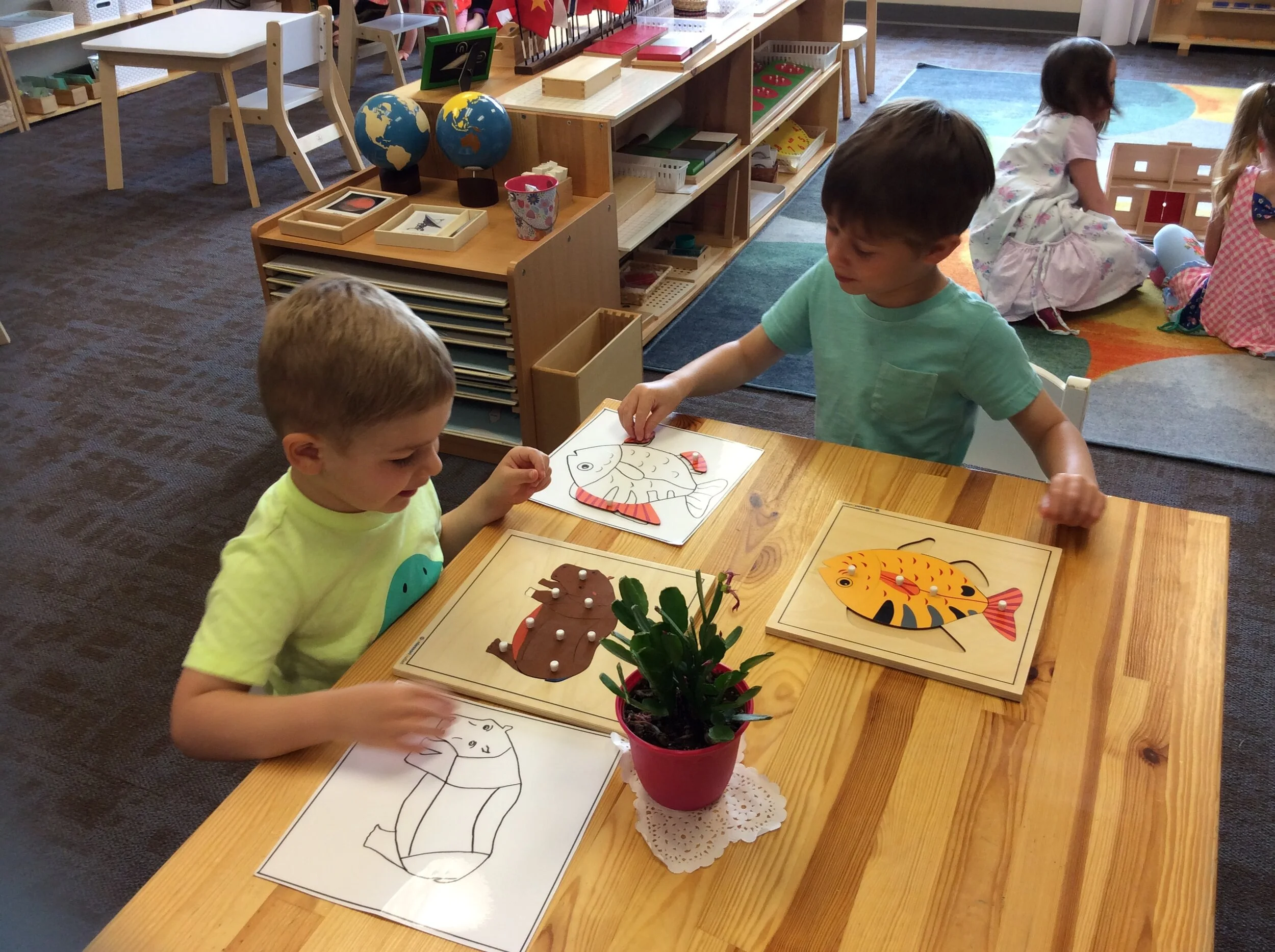
This area introduces children to land and water forms (Lake and Island), volcanoes, the Earth and Solar System. They learn names of leaves and how to classify them, parts of animals, etc. Activities include Sink and Float, Living and Non-Living, Magnetic or Non-Magnetic, Land and Water Forms, the structure of the Earth, and Botany.

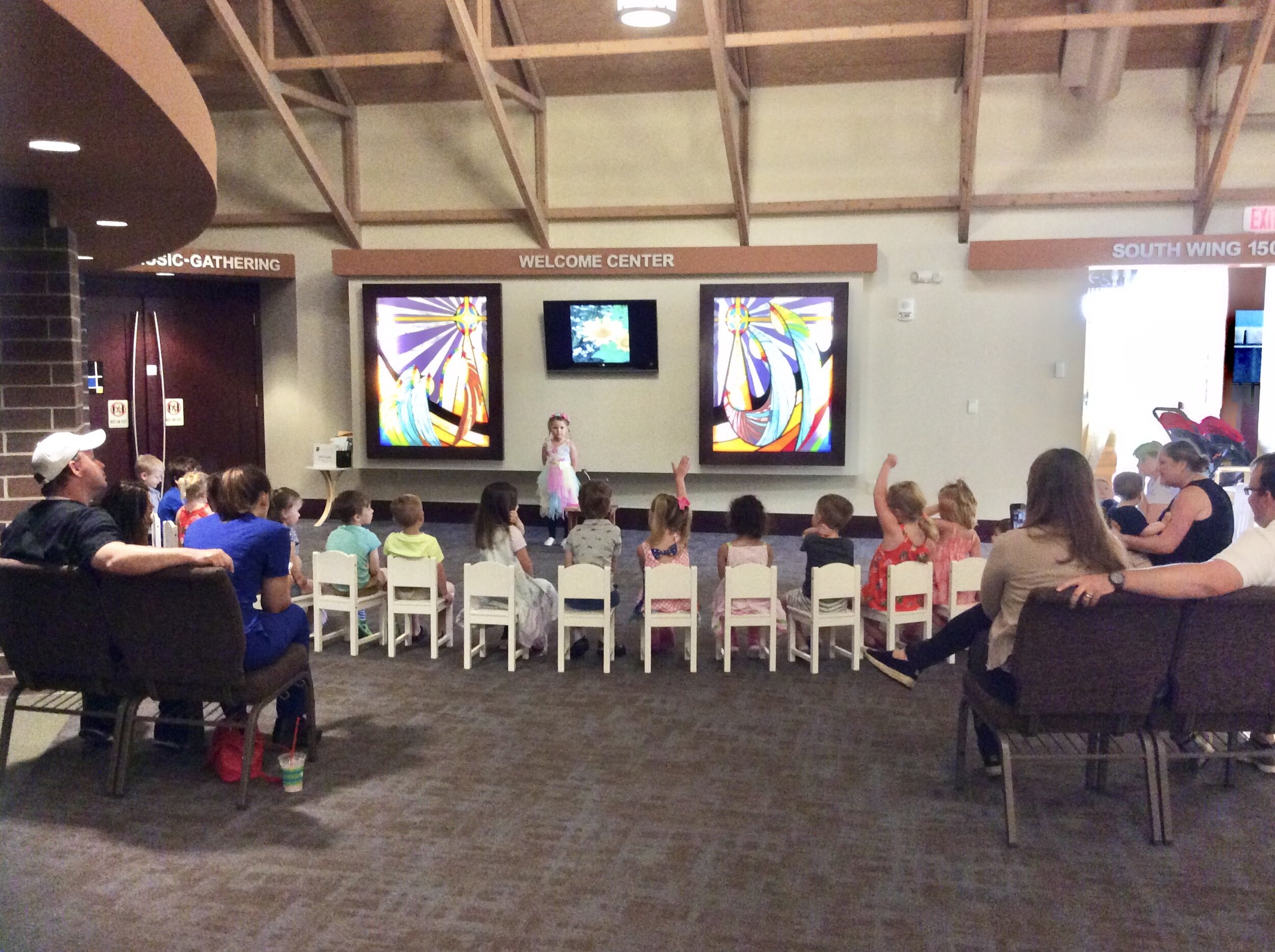
Casa graduation ceremony. Moving on to elementary
9. Art:
This area supplies a variety of creative activities. Fine motor practice, color, shapes and imagination all come into play in this area. Lessons include learning about great artists, cutting with scissors, hole punching, play dough, sewing, and more.
10. Music:
This area exposes children to rhythm and makes them aware of different sounds from our surroundings and nature. Our classroom has a beautiful set of bells, that are the same is size and color, but each has a different sound. They will learn about all instrument groups (brass, strings, woodwinds, etc.), as well as about different composers and their music.
11. Foreign Languages:
This area exposes children to different languages through games, songs, and activities. Lessons initially include counting, colors, and basic vocabulary. Also, children are exposed to music from different countries as we study about different parts of the world. The languages your child will be exposed to in class are Italian, French, Spanish, Japanese, Romanian, and more.
The child is prepared for advancement into our lower elementary program.